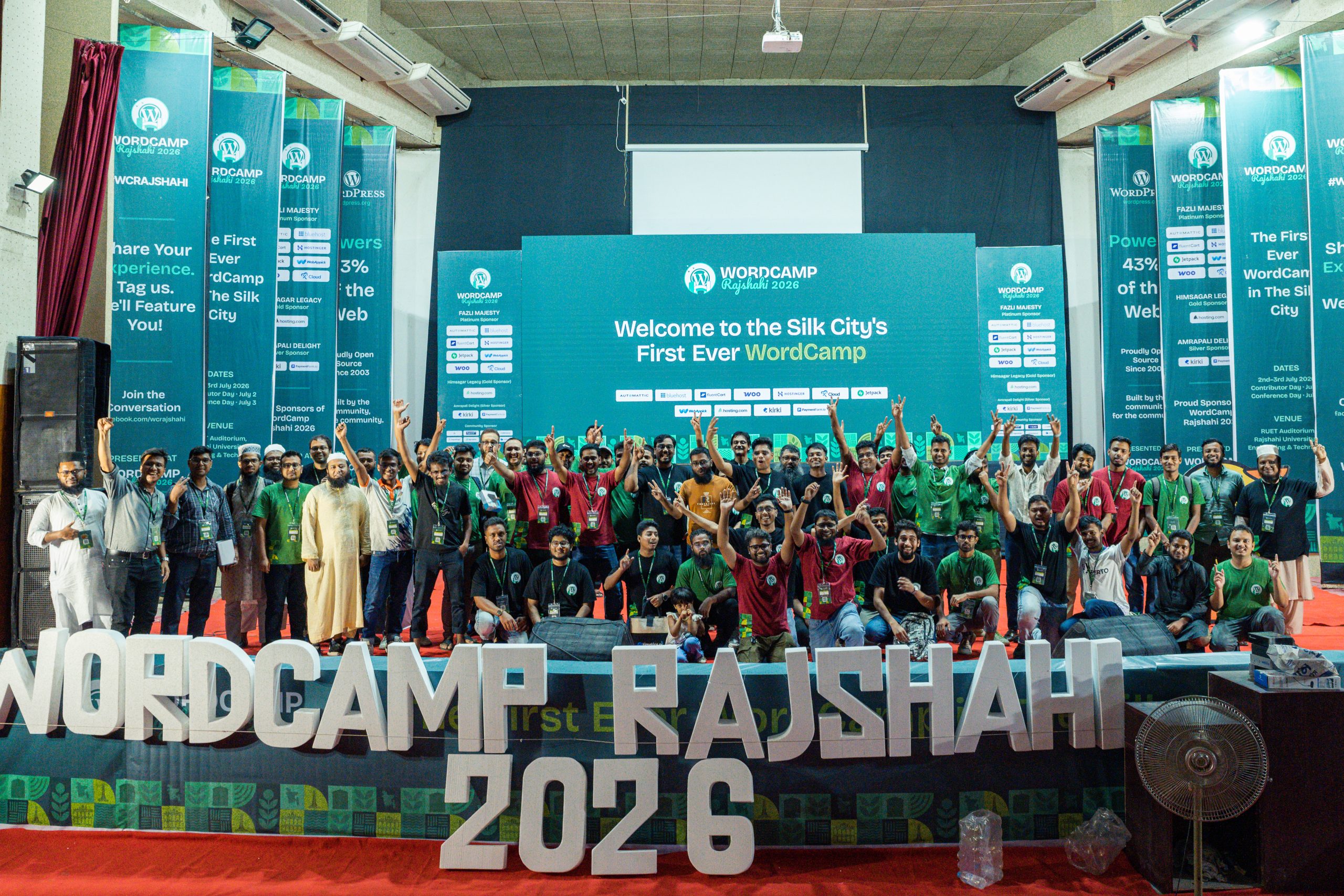
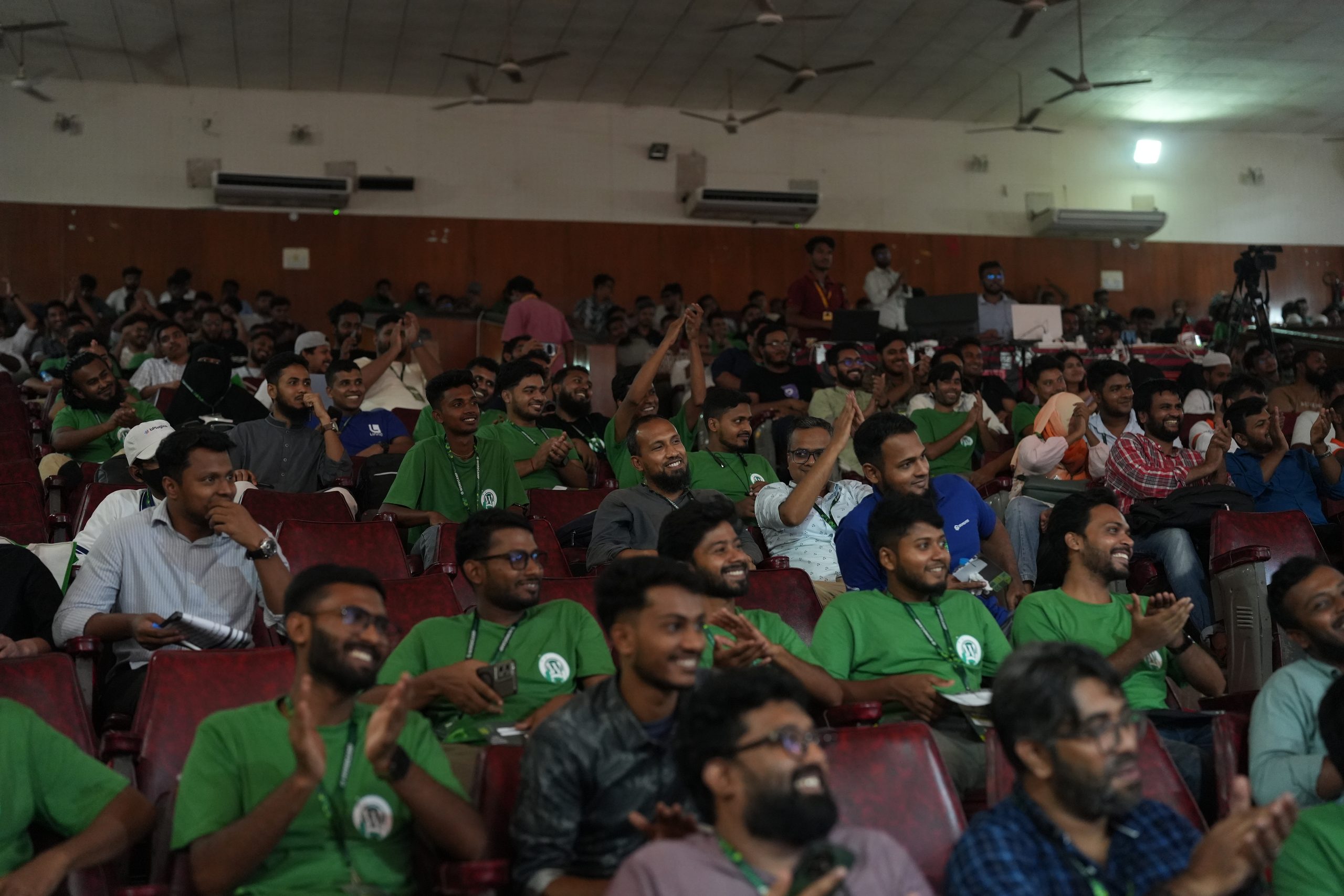
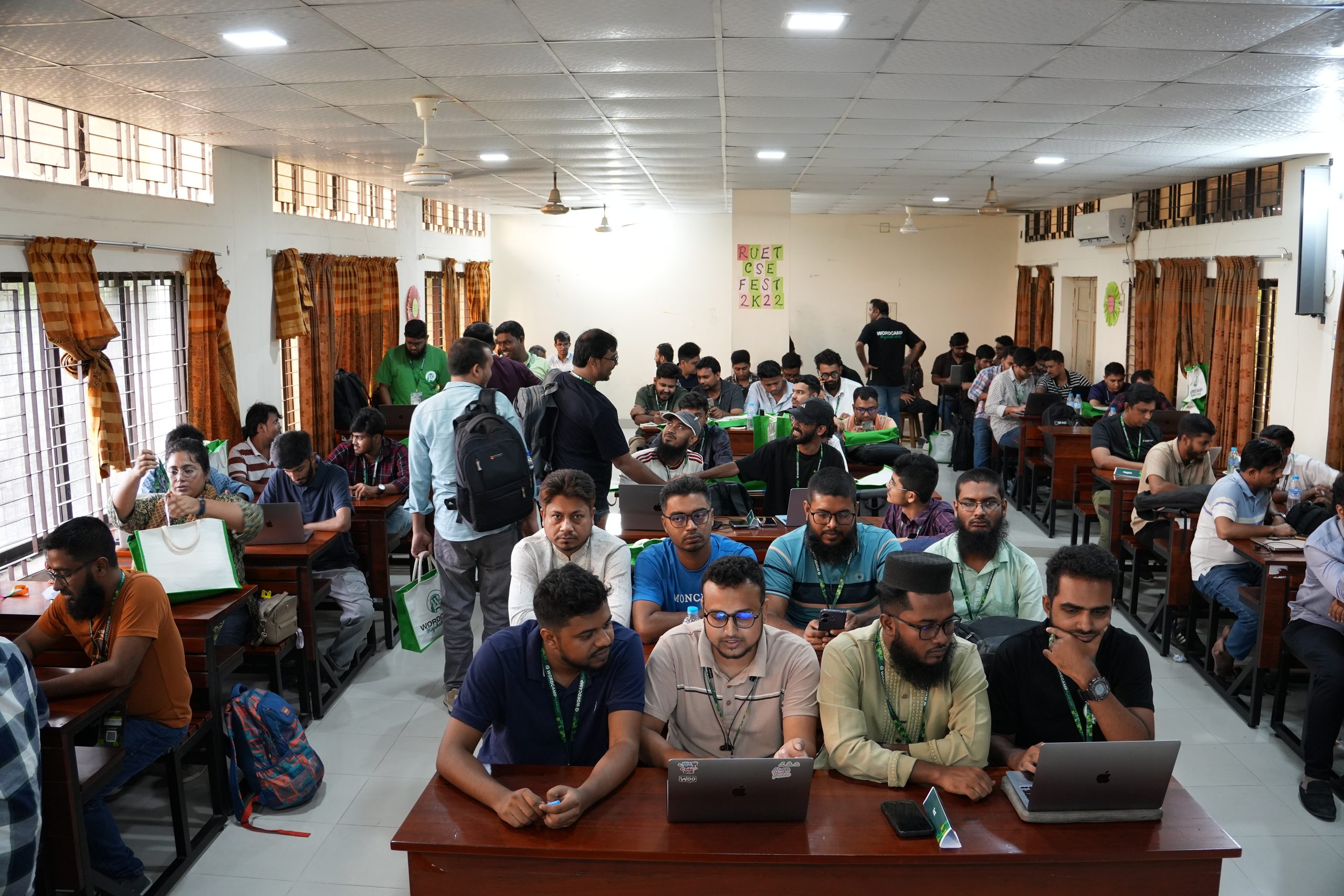
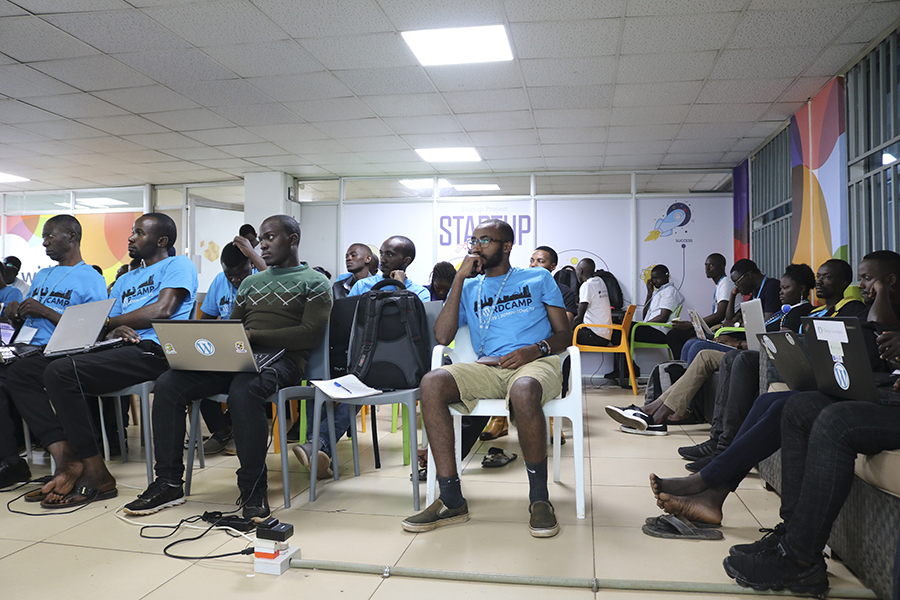
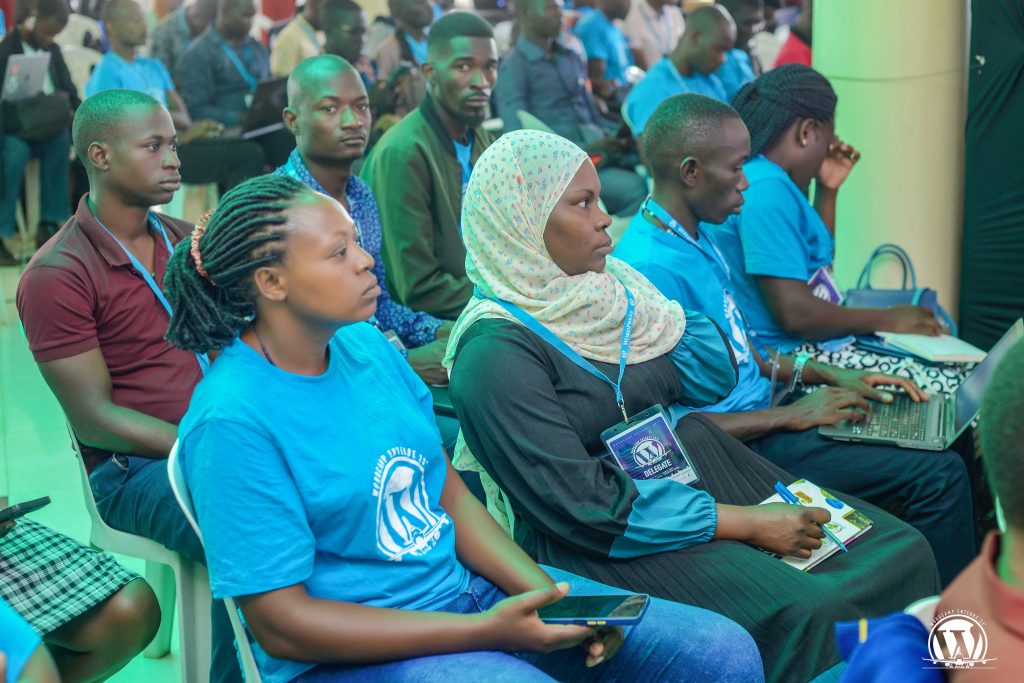
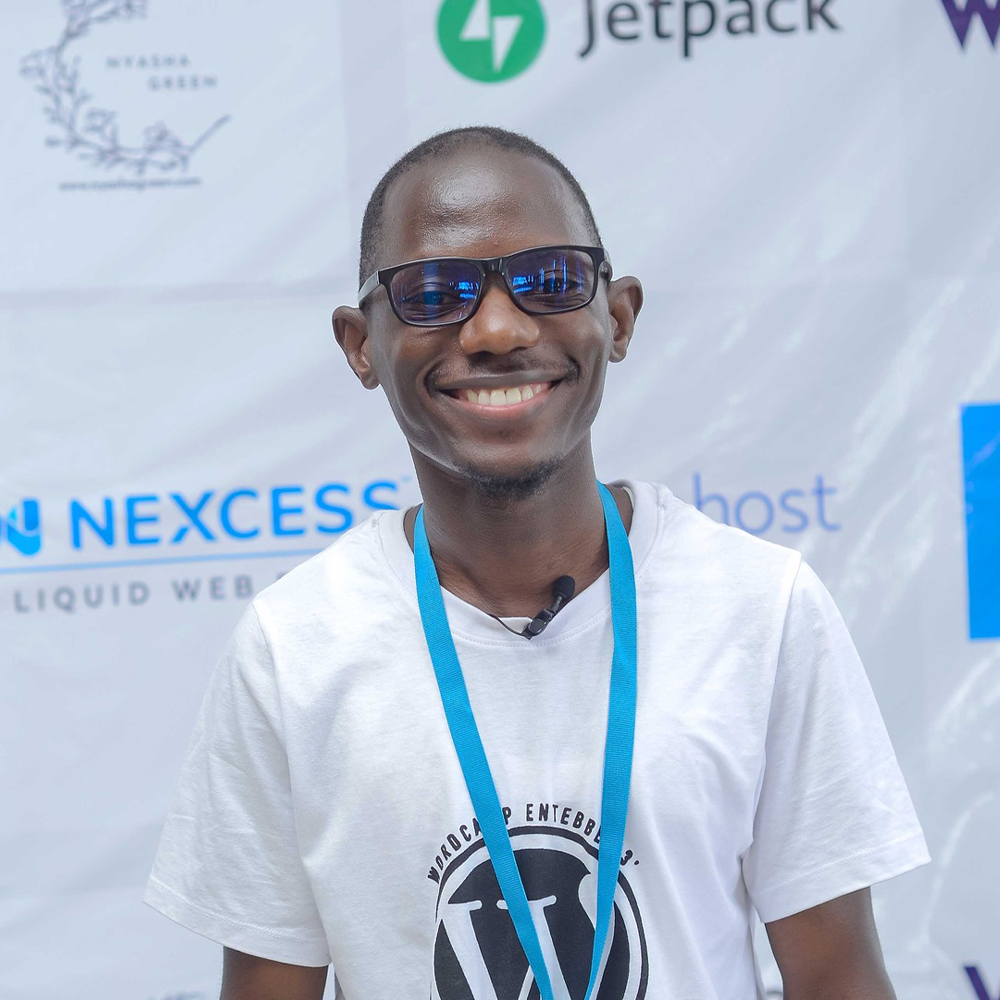
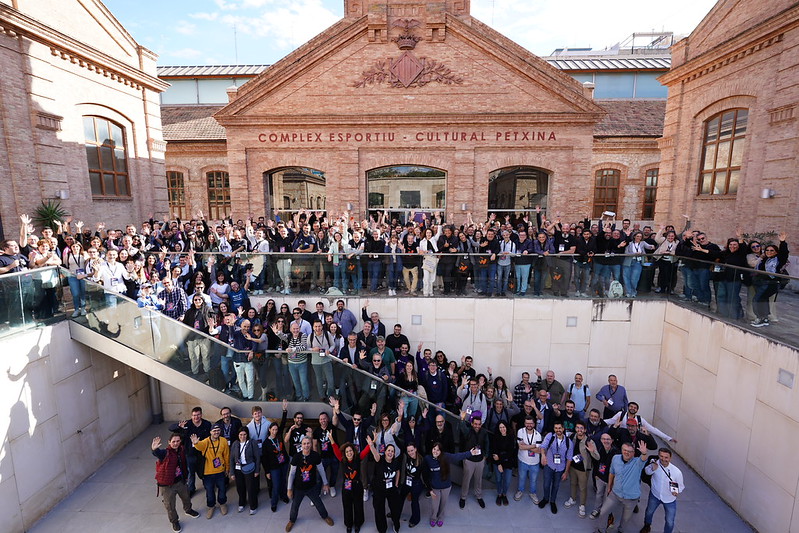
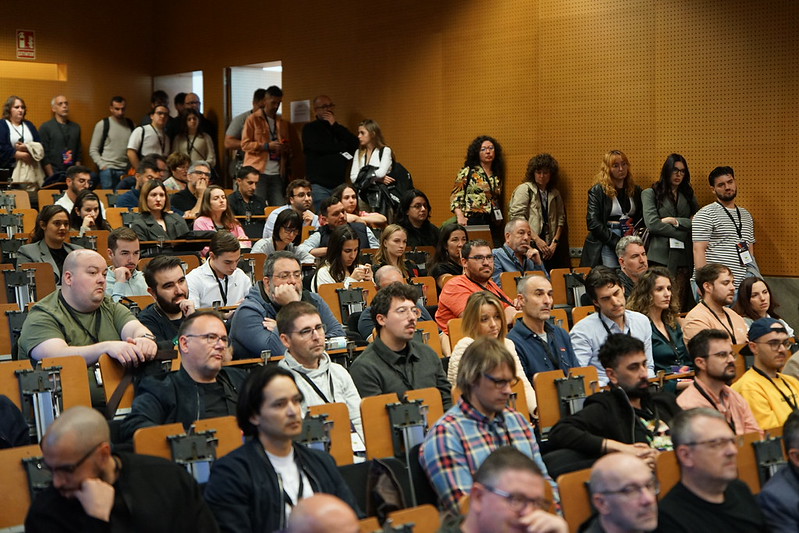
WordCamp Rajshahi 2026, held on July 2nd-3rd, 2026, at the Rajshahi University of Engineering & Technology (RUET) Auditorium, brought together WordPress enthusiasts, developers, designers, business owners, students, and open-source contributors from across Bangladesh and beyond. As a non-profit, community-driven conference, the event demonstrated the strength of collaboration, knowledge sharing, and the spirit of open source.
More than just a technology conference, WordCamp Rajshahi became a place where people connected, exchanged ideas, and inspired one another to contribute to the future of WordPress.
Sharing Knowledge That Matters
The conference featured a diverse lineup of local and international speakers who shared practical experiences, real-world case studies, and emerging trends shaping the web today.
Artificial intelligence was one of the most discussed topics throughout the event. Sessions explored how AI is transforming the way developers and businesses work—from integrating AI into WordPress without writing code to building customer support agents, using modern Large Language Models (LLMs) for development, debugging applications, and improving everyday workflows.
Performance, architecture, and security also received significant attention. Speakers demonstrated advanced WordPress optimization techniques, object caching strategies, no-code animations using GSAP, methods for identifying system vulnerabilities, and practical approaches to cleaning malware-infected WordPress websites with AI.
Beyond technical sessions, the conference emphasized personal and professional growth. Attendees learned about building successful careers, transitioning from startups to multinational companies, product marketing, the realities of remote work, and maintaining mental well-being while working in the technology industry.
Contributor Day: Giving Back to WordPress
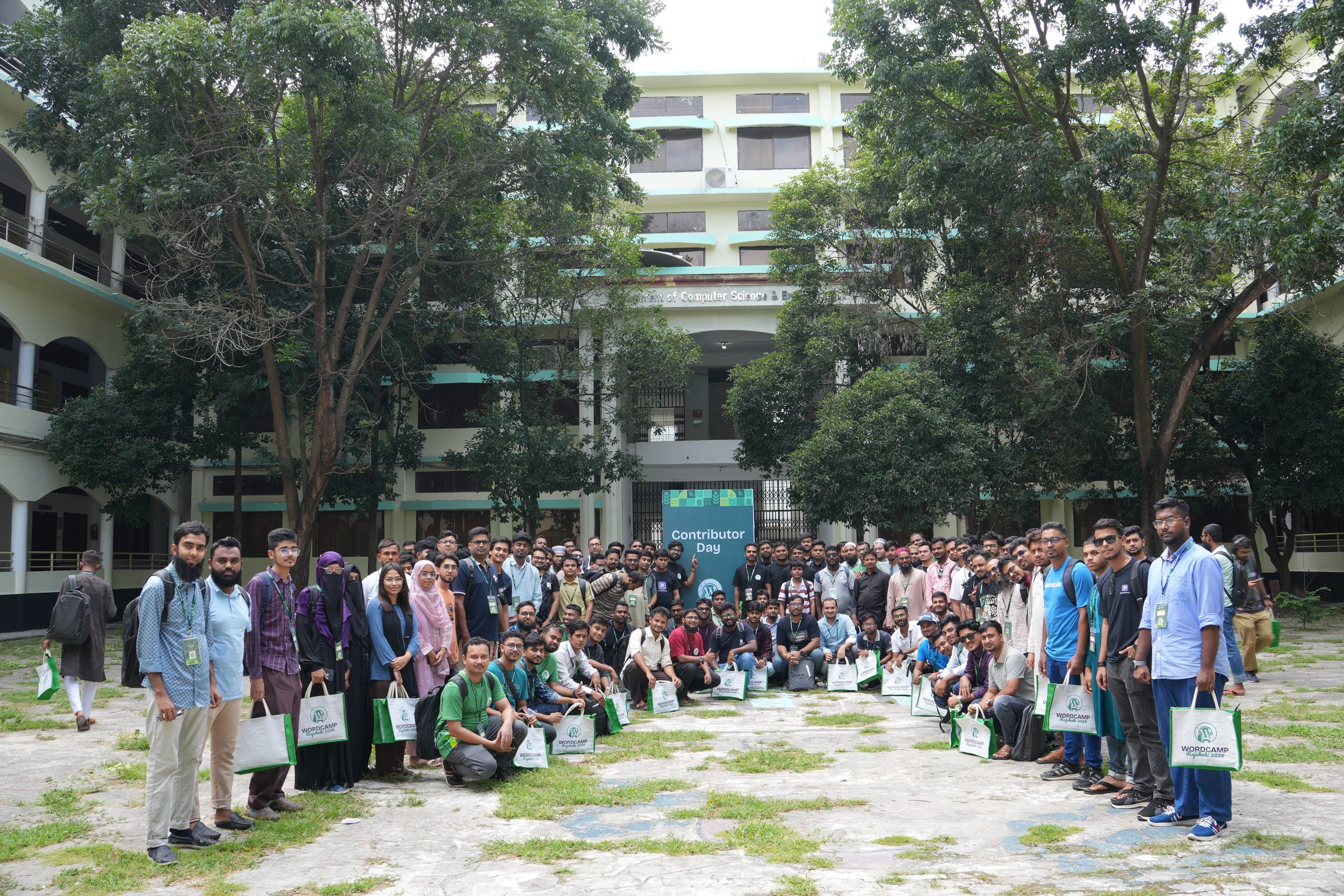
Contributor Day, held on July 2, served as one of the most meaningful parts of the event.
Participants worked alongside experienced WordPress contributors and Table Leads to improve the WordPress project itself. Whether they contributed to Core, Accessibility, Themes, Plugins, Polyglots (translations), Education, or Photos, attendees experienced firsthand how community collaboration built the global WordPress ecosystem.
For many first-time contributors, it was their first opportunity to make a direct contribution to one of the world’s largest open-source projects.
Campus Connect: Inspiring the Next Generation
One of the highlights of WordCamp Rajshahi 2026 was the Campus Connect initiative.
To encourage student participation in open source, 40 university students received complimentary tickets to attend the event. This initiative introduced young learners to the WordPress community, allowing them to interact with experienced professionals, attend technical sessions, and discover opportunities to contribute to open source.
By investing in students today, the community hopes to cultivate the next generation of developers, designers, and contributors who will help shape the future of WordPress.
Sponsors Who Made It Possible
WordCamp events are made possible through the generous support of organizations that believe in strengthening the open-source ecosystem. Rather than simply sponsoring an event, these companies invest in community growth and knowledge sharing.
This year, the sponsorship tiers celebrated Rajshahi’s famous mango heritage.
Their support enabled the community to deliver a world-class experience while keeping the event affordable and accessible.
Thank You to Everyone Behind the Scenes
An event of this scale is never the work of a single person.
Our sincere appreciation goes to every speaker and Contributor Day table lead who generously shared their knowledge and experience with the community.
We are equally grateful to our organizers and volunteers. From sponsorship coordination, website management, registration, design, photography, audiovisual production, venue operations, food management, and attendee support, every team member played a vital role in ensuring the event ran smoothly.
Their dedication transformed months of planning into an unforgettable experience for every attendee.
Looking Ahead
WordCamp Rajshahi 2026 demonstrated what is possible when passionate volunteers, contributors, sponsors, and community members work toward a common goal.
The event was more than a conference—it was a celebration of learning, collaboration, and the open-source values that make WordPress one of the world’s most successful communities.
As the community continues to grow, the relationships built, ideas shared, and contributions made during WordCamp Rajshahi 2026 will inspire future events and encourage even more people to participate in the global WordPress ecosystem.
Here’s to many more WordCamps, more contributors, and a stronger open-source community in Bangladesh and beyond.
Twenty-three years ago, a team of 2 friends released something into the world that they probably couldn’t have fully imagined the consequences of. Not just a publishing tool, though it became that for hundreds of millions of people but a reason to find each other.
WordPress just turned 23. And if you’re not yet part of this community, I want to tell you what you’re missing. It starts, usually, with a problem you need to solve. A website. A blog. A business that needs a home on the internet. You find WordPress, and it works, and you move on with your life. That’s how most stories begin here.
But then something else happens.
You find a forum thread where someone spent three hours helping a stranger debug a plugin for free. You find a WordCamp in your city and you show up mostly for the tote bag and the discount codes. You end up in a conversation over coffee with someone who has been building on WordPress since 2007, and they treat your questions like they’re worth answering. Because to them, they are.
That’s when the story changes.
WordCamps are where this community becomes visible in a way that’s hard to describe to someone who hasn’t been. The person who wrote the code that quietly runs your website is sitting two seats away from someone who published their very first post this morning. A developer who has contributed thousands of hours to core is sharing a lunch table with a grandmother in Uganda who just launched her first online store.
No hierarchy. No velvet ropes. Just people who showed up.
You stay because someone grabs your arm at the end of a session and says, your plugin changed my business, and they mean it in a way that lands somewhere deep. You stay because the late nights and the loud rooms and the occasional quiet moment in a hallway conversation turn into something you didn’t expect: friendship. Partnership. For some of us, something that feels a lot like family.
This is what open source looks like when it actually works.
Not obligation. Not corporate mandate. Gratitude. People giving back because something was given to them first, freely, without condition, by people they may never meet. The whole thing runs on a kind of trust that shouldn’t work as well as it does, and yet here we are. Twenty-three years in. Still going.
On this birthday, I want to name some of the people and organizations who make this community what it is, who show up, contribute, advocate, and remind the rest of us why we’re here.
People wishing WordPress a happy birthday:
@thehopemonger, @stephendumba1, @noelinenandago, @adityakane, @ssebuwufumoses, @kiviiri, @unintended8 among others
And the companies whose work brings so many of us to WordPress in the first place:
WordCamp Kampala 2026 returns as a gathering of the region’s WordPress community, bringing together developers, designers, content creators, entrepreneurs, educators, and tech enthusiasts for two days of learning, collaboration, and impact. Organized by the WordPress Kampala Meetup, this community-driven event continues to grow as a key platform for knowledge sharing and innovation within Uganda’s evolving digital landscape.
As part of the global WordCamp program, WordCamp Kampala is more than just a conference. It is a space where people come together to exchange ideas, build connections, and explore how WordPress and related tech can be used to solve real-world problems. Each year, the event is shaped by a theme that reflects both local needs and global trends. In 2026, that theme is “Tech for Social Good.”
This year’s theme speaks directly to the moment we are in. Technology is evolving at an unprecedented pace, with artificial intelligence transforming how websites are built, how content is created, and how digital products are managed. These rapid changes present both opportunities and challenges. For many in the WordPress ecosystem, the questions are becoming more urgent: What skills matter most in this new era? How do we adapt to AI-driven tools while staying relevant? And most importantly, how do we ensure that technology continues to serve people in meaningful ways?
WordCamp Kampala 2026 responds to these questions by shifting the focus beyond efficiency and automation toward purpose and impact. “Tech for Social Good” emphasizes the responsible use of WordPress and emerging technologies to create inclusive, accessible, and sustainable digital solutions. It is a call to action for the community to think beyond building websites, and instead consider how those websites and tools can improve lives, support education, and empower underserved communities.
The event will feature a range of talks, workshops, and interactive sessions designed to equip attendees with both practical skills and forward-looking insights. Participants will explore topics such as web development, content strategy, digital accessibility, and the integration of AI into WordPress workflows. More importantly, they will engage in conversations about ethics, sustainability, and the human side of technology, ensuring that innovation does not come at the cost of inclusivity.
A key highlight of WordCamp Kampala 2026 is the Contributor Day, where attendees have the opportunity to actively participate in the global WordPress project. Whether contributing to code, documentation, translations, or community support, participants move from being consumers of technology to contributors shaping its future. This hands-on experience not only builds skills but also strengthens the spirit of open-source collaboration that WordPress is built on.
Equally impactful is the Do-Action initiative, which brings the theme of social good to life. During the Do-Action, participants will collaborate to build or improve websites for differently abled schools and educational institutions. This initiative focuses on mentorship, skill transfer, and sustainability, ensuring that the benefits extend far beyond the event itself. By working on real projects that serve real communities, attendees experience firsthand how technology can be used as a force for positive change.
What makes WordCamp Kampala unique is its strong sense of community. The event is powered by volunteers who dedicate their time and energy to create a welcoming and inclusive environment. It is a space where beginners feel encouraged to learn, professionals feel inspired to share, and everyone feels part of something bigger. This collaborative spirit is what transforms WordCamp from a typical tech event into a meaningful community experience.
Beyond the sessions and activities, WordCamp Kampala 2026 offers valuable opportunities for networking and connection. Attendees will meet like-minded individuals, potential collaborators, and industry leaders, building relationships that often lead to new projects, partnerships, and career growth. These connections are a vital part of the WordCamp experience, helping to strengthen the broader tech ecosystem in Uganda.
As technology continues to evolve, events like WordCamp Kampala play an important role in helping communities adapt and thrive. They provide a space to ask difficult questions, explore new ideas, and collectively shape the future of the web. By focusing on “Tech for Social Good,” WordCamp Kampala 2026 ensures that this future is not only innovative but also inclusive and impactful.
Ultimately, WordCamp Kampala 2026 is about people. It is about volunteers giving their time, speakers sharing their knowledge, and attendees supporting one another as they navigate a rapidly changing digital world. It is about using technology not just to build, but to uplift, empower, and create lasting change.
As the community gathers in May 2026, WordCamp Kampala stands as a reminder that the true power of technology lies not in the tools themselves, but in how we choose to use them.
Do not miss the opportunity to learn, connect, and be part of a community using WordPress to create real impact. We hope to see you at WordCamp Kampala 2026.
When I first received the Kim Parsell Memorial Scholarship, it didn’t feel real. The idea that I would travel to Mumbai, India, for WordCamp Asia 2026 as a volunteer, fully supported, was both exciting and overwhelming.
The Kim Parsell Memorial Scholarship is a scholarship created by the WordPress Foundation in 2015 to honor Kim Parsell, a highly respected contributor in the WordPress open-source community. She was affectionately known as “WPMom” because of how welcoming and supportive she was to new contributors.
The Kim Parsell Memorial Scholarship provides annual funding for one WordPress contributor who identifies as a woman to attend WordCamp US, WordCamp Asia, or WordCamp Europe; the flagship events for the WordPress community.
This was my first time visiting India, and it marked the beginning of an unforgettable journey. I traveled with my husband, and from the moment we arrived in Mumbai, everything felt alive; the movement, the people, the energy. Even before the event began, the city itself was already an experience.
However, the journey didn’t start perfectly. When I landed, my suitcase didn’t arrive with me. Standing in a new country without my belongings was stressful, and for a moment, I didn’t know what to do. But somehow, that challenge became part of the story. I quickly adapted, bought essentials, and chose not to let it ruin the experience.
Volunteering at the event was something I will always be proud of. It gave me a completely different perspective. Instead of just attending, I became part of the team that made it all happen. Being behind the scenes at such a global event was both humbling and inspiring.
Outside the conference, Mumbai continued to reveal itself in beautiful ways.
We stayed at Sofitel Mumbai BKC, where the hospitality was warm and comforting—something I truly appreciated after long event days. Food, on the other hand, was an adventure of its own. I quickly realized that Indian cuisines are much spicier than what I’m used to. I didn’t eat much, but I still enjoyed trying new dishes, even when they were too hot for me.
We also found time to explore.
Visiting the Gateway of India was surreal. Seeing it in person, especially in the evening, felt like stepping into a postcard. Southern Mumbai was equally beautiful, filled with history, architecture, and ocean views that made everything feel calm and timeless.
But one of the most memorable experiences was something simple, taking the local train. It was crowded, fast-paced, and completely different from anything I had experienced before. Yet, it gave me a real glimpse into everyday life in Mumbai. That moment stayed with me.
Of course, there were small challenges along the way. Communication wasn’t always easy, and at times we struggled with the language barrier. But what stood out was how kind and patient people were. Even when words failed, kindness didn’t.
What made this journey even more special were the people who helped me along the way.
From those who supported me before the trip, to those who stepped in when I needed help at the airport, to the friends who showed me around the city, each person added something meaningful to my experience. Their kindness turned a good trip into a great one.
No journey is ever made meaningful by places alone, it is the people we meet along the way who leave the deepest impressions. I would like to extend my heartfelt gratitude to those who made my time in Mumbai truly unforgettable. My sincere thanks to Caroline Harrison for thoughtfully coordinating my hotel arrangements and ensuring my stay at Sofitel was smooth and comfortable from beginning to end. Your support before and throughout the trip brought such ease and reassurance.
To Vishal Mukadam, thank you for stepping in when I needed help most, your determination at the airport to ensure my suitcase was located and delivered to the hotel was extraordinary. I am equally grateful for the unforgettable local train journey and visit to the Gateway of India, an experience that became one of the most memorable highlights of my trip.
A warm thank you to Aditya Kane and wife for your incredible kindness, generosity, and hospitality. You welcomed us with such warmth that Mumbai felt less like a destination and more like home. And to Priyanka, thank you for sharing your time, friendship, and for showing me more of Mumbai’s beauty beyond the usual sights. Your presence added so much joy, laughter, and meaning to my stay.
To each of you: thank you for your kindness, your generosity, and for making this journey not just a trip, but a deeply cherished memory.
Looking back, this wasn’t just a trip to attend an event. It was a journey of growth.
I learned how to adapt when things don’t go as planned. I experienced a new culture in a deeply personal way. I connected with people from around the world. And most importantly, I contributed to something bigger than myself.
The Kim Parsell Scholarship didn’t just take me to Mumbai, it gave me an experience that changed how I see the world and my place in the WordPress community.
As I returned home, I carried more than memories. I carried lessons, gratitude, and a renewed sense of purpose.
And for that, I will always be thankful. Thank you WordPress and the entire WordCamp Asia organizing team. You gave me a new purpose
Bringing WordPress and Web Design Skills to Over 1,200 Students Across Eastern Uganda
WPCC Jinja at Mpumudde High School Jinja
Summary
Over a five-month period (with a two-month holiday/national elections break) the WordPress Jinja community successfully piloted Africa’s first and largest WordPress Campus Connect program, reaching 12 schools and institutions across Eastern Uganda. Through hands-on workshops, mobile ICT labs, and student-led digital clubs, the initiative introduced 1,293 students and 81 educators to WordPress, open source, and practical digital skills. Designed to bring technology education directly into classrooms where opportunities are often limited, the program empowers young people to explore digital careers, build online portfolios, and connect with the global WordPress community. Despite a two-month holiday and national election break, along with national exams and national teacher strikes, the first edition of Campus Connect Jinja demonstrated how open-source learning and imparting of WordPress and web design skills can grow sustainable student communities and inspire the next generation of digital creators.
Why Campus Connect?
While WordCamps and meetups often bring together developers, designers, and professionals already working in technology, Campus Connect focuses on students who are just beginning their digital journeys. It creates opportunities for young people to encounter WordPress early, discover what open source means, and begin building skills that can shape their future.
The launch of Campus Connect in Jinja builds on years of student-centered initiatives already taking place within the local WordPress community. From free web design hackathons for students to youth-focused workshops held alongside WordCamps, our local organizers have steadily worked to make technology education more accessible.
Campus Connect represents the next step in that journey: a structured outreach program that connects schools directly with the global WordPress ecosystem while cultivating the next generation of open-source contributors.
WPCC Jinja at Jinja Senior Secondary School
Background
When our WordPress Jinja community concluded WordCamp Jinja 2025 (our 4th WordCamp) hosted at Jinja Senior Secondary School, one moment stood out clearly: the enthusiasm of the students who had attended and participated actively. Their curiosity about WordPress, web publishing, and open-source technology revealed a powerful opportunity. What we had witnessed should not remain a one-time experience. From that realization, the idea of bringing the WordPress Campus Connect initiative to Jinja was born.
Campus Connect is designed to bring WordPress directly into classrooms and learning spaces where opportunities in technology are often limited. The program focuses on introducing students to open source while equipping them with practical digital skills that can shape their future careers.
Through the initiative, the WordPress Jinja community set out to:
Introduce WordPress in classrooms where opportunities in technology are often limited
Empower young people with hands-on digital skills that prepare them for careers
Build sustainable student-led communities through clubs and ongoing activities
Connect local talent with global contributors, creating new opportunities for mentorship and collaboration
By meeting students where they are on their campuses and within their schools, Campus Connect ensures that WordPress communities will continue to grow long after the first workshops are completed.
However, the vision quickly revealed a significant challenge. Many schools in and around Jinja lack access to functioning computer laboratories or digital infrastructure. Without computers, students would have little chance to explore WordPress, learn web publishing, or participate in the open-source ecosystem.
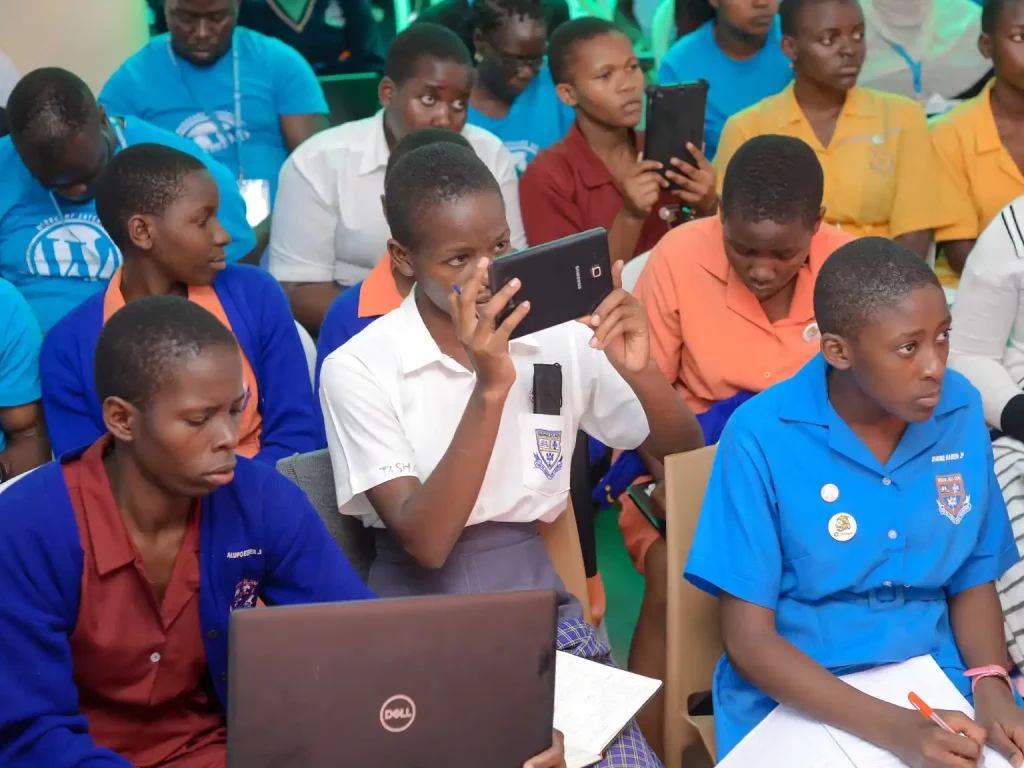
Determined not to leave anyone behind, the WordPress Jinja community partnered with local ecosystem partners that could provide mobile ICT laboratories and laptops. With these resources, the community launched a five-month outreach program that brought WordPress training directly to schools across Eastern Uganda both with in-house labs and our mobile ICT labs from partners.
By the end of the program, more than 1,200 students and educators across twelve institutions had participated, including schools serving learners with disabilities.
The Jinja Campus Connect Model
Each Campus Connect visit followed a structured learning model designed to combine technical training, digital literacy, and career exploration.
All sessions included:
Introduction to WordPress and the open-source ecosystem
Hands-on website creation and content publishing
Digital storytelling and blogging
Responsible digital citizenship and online safety
Career pathways including freelancing, entrepreneurship, and digital work
Every visit concluded with the formation of a Student-Led WordPress and Digital Skills Club within the host institution.
These clubs serve as satellite communities connected to the WordPress Jinja Meetup, ensuring that the learning continues long after the workshops end. Over time, the clubs will become fully integrated within their schools according to institutional guidelines and eventually organize their own student-led WordPress activities.
Through these clubs, Campus Connect plants the seeds of sustainable local communities that can continue learning, collaborating, and contributing to open source.
Our Journey of Impact: Campus by Campus Highlights
1. Macedonian Vocational Institute
Macedonian Vocational Institute, Jinja – 102 Students and 5 Teachers – 4th October 2025
At Macedonian Vocational Institute, the session centered on the practical value of WordPress for vocational and entrepreneurial careers. Students explored how websites and online portfolios can help artisans, technicians, and young professionals present their skills, attract clients, and grow their businesses. Through hands-on demonstrations, participants were introduced to web design, content creation, and the basics of WordPress development, while also learning how open-source tools can create opportunities beyond the classroom. A student WordPress club was further strengthened during the visit to support continued practice and portfolio building.
2. Jinja Senior Secondary School
Jinja SSS – 253 Students and 6 Teachers – 9th and 11th October 2025
Jinja Senior Secondary School, which hosts more than 5,000 students, served as the launch point for the Campus Connect outreach program. Across two engagement sessions, an introductory session and a deeper hands-on session, students were introduced to WordPress fundamentals, website creation, blogging, and the wider culture of open-source collaboration. They explored web design, digital storytelling, and creative publishing while also gaining exposure to WordPress development concepts. The visit concluded with the establishment of a student WordPress satellite community that will eventually become a student club, led by student coordinators from the school leadership and Science and ICT Club, who will guide blogging activities and peer learning within the school community.
3. Mpumudde High School (Horizon Campus) Jinja
MHS Jinja -169 Students and 8 Teachers – 23rd October 2025
The Campus Connect session at Mpumudde High School focused strongly on digital storytelling and youth expression. Students examined how WordPress can be used to publish ideas, document school activities, and amplify student voices in meaningful ways. Alongside practical work in creating blog posts and structuring pages, participants were introduced to the basics of website creation and open-source participation. The session encouraged students to see digital platforms not only as technical tools, but also as spaces for creativity, identity, and shared learning. A student club was formed to carry this momentum forward.
4. Gloryland Christian College, Jinja
GCC Jinja – 59 Students and 4 Teachers – 31st October 2025
Students at Gloryland Christian College engaged in a session that combined technical learning with conversations about responsible digital participation. Alongside hands-on website creation, they explored blogging, online publishing, and the importance of credibility, ethics, and thoughtful communication in digital spaces. The training introduced students to the possibilities of WordPress while also encouraging them to think critically about how content is created and shared. The visit concluded with the formation of a student WordPress club to guide continued learning and practice.
5. Royal Secondary School, Buwenge
Royal SS Jinja 61 Students and 6 Teachers – 4th November 2025
At Royal Secondary School, the workshop emphasized the role of WordPress in school communication and community storytelling. Students explored how websites can be used to highlight school initiatives, student clubs, and local projects while learning the foundations of web publishing and site structure. The session connected digital skills with the power of sharing local experiences and preserving community narratives online. By the end of the visit, students had begun to see WordPress as a practical tool for both expression and visibility, and a student WordPress club was established to continue the work.
6. Jinja Tech Hub
Jinja Tech Hub – 47 Students and 5 Instructors – 18th November 2025
The engagement at Jinja Tech Hub leaned into entrepreneurship, freelancing, and digital innovation. Participants explored how WordPress can be used to create business websites, showcase services, and build strong professional portfolios. The session also introduced broader ideas around WordPress development, site structure, and the value of open-source skills in the digital economy. For many participants, the training connected technical knowledge with real pathways into work, enterprise, and self-employment.
7. Busoga Light College, Jinja
BLC Jinja – 63 Students and 10 Teachers – 6th December 2025 and follow up holiday visit on 11th January
Busoga Light College hosted an extended Campus Connect engagement that allowed students to move beyond introduction into deeper exploration. Participants learned how to organize content, build digital portfolios, and manage simple websites while strengthening their understanding of WordPress as both a technical and creative platform. Teachers took an active part in the sessions, reinforcing the school’s support for digital skills development. A follow-up visit in January created space for mentorship and helped the newly established WordPress club continue applying the skills students had begun to develop.
Phase Two
After the holiday and national election break, the Campus Connect initiative resumed in February 2026, following a national mandate from the Government of Uganda for schools to re-open on 10th February due to elections in January. This second phase extended the program’s reach to additional institutions across Eastern Uganda and brought the WordPress learning experience to even more students.
8. Nsuube SDA Secondary School
Nsuube SDA Jinja – 126 Students and 6 Teachers – 12th February 2026
At Nsuube SDA Secondary School, students were introduced to WordPress as both an educational and creative platform. The session highlighted how blogging, digital storytelling, and personal portfolios can support academic work while also helping students share their ideas with wider audiences. Through practical demonstrations, participants learned the basics of website creation and content publishing in ways that connected directly to school projects and self-expression. The visit concluded with the formation of a student club that will continue practicing and building on these foundations.
9. Kaliro High School
Kaliro High School – 152 Students and 12 Teachers – 21st February 2026
Kaliro High School recorded one of the largest turnouts during the second phase of the program. Students showed strong enthusiasm for blogging and digital storytelling, especially around the idea of sharing school activities, community experiences, and student perspectives online. The workshop combined practical page-building exercises with broader discussions about digital literacy and the growing importance of online communication in education and everyday life. A student club was established to support continued collaboration and peer learning after the visit.
10. Jinja North Secondary School (Butembe Heritage Campus)
JNOSS – 131 Students and 8 Teachers – 23rd February 2026
At Jinja North Secondary School, the sessions focused on hands-on website creation and the wider opportunities that digital skills can unlock. Students explored how WordPress knowledge can connect to freelancing, online services, and entrepreneurship, while teachers participated actively in discussions about integrating digital learning into the school environment. The training positioned WordPress not just as a publishing tool, but as a gateway to practical and marketable skills. A student WordPress club was formed to sustain interest and continued engagement.
11. H.E.L.P International Vocational Institute, Jinja
HELP Jinja – 53 Students and 8 Teachers – 25th February 2026
At H.E.L.P International Vocational Institute, the training highlighted WordPress as a professional tool for vocational graduates and young entrepreneurs. Students explored how websites can be used to present technical skills, market services, and create portfolios that speak to real-world opportunities. The session blended practical exercises with discussions about visibility, client outreach, and digital professionalism, helping participants connect their vocational training with the demands of an increasingly online economy.
12. C.H.I.M.E Secondary School and Vocational Institute
CHIME Jinja – 79 Students and 5 Teachers – 28th February 2026
The final Campus Connect engagement took place at C.H.I.M.E Secondary School and Vocational Institute, where students explored WordPress as a bridge between academic learning and vocational development. The session covered blogging, portfolio creation, and communication platforms that can support both school-based and practical career pathways. It also emphasized collaboration, creativity, and digital presence as essential skills for young people preparing for the modern world. A student WordPress club was established to carry the program forward within the school.
A Synergy of Local Community Efforts:
Lessons and Reflections
Like many long term community-driven initiatives in Africa, the Campus Connect program encountered several logistical challenges.
Nationwide teachers’ strikes in 2025 disrupted school schedules
National examination periods and elections
School timetable changes were sometimes communicated late
Photography volunteers, mostly university students experienced delays in compiling and editing event documentation
Despite these challenges, the initiative continued successfully thanks to the dedication of community volunteers and partners.
Acknowledgement and Appreciation
The success of our Campus Connect event series reflects the strength of collaboration within both the local and global WordPress ecosystems. We extend our gratitude to the Global WordPress Campus Connect sponsors, whose continued support for open source and education makes initiatives like this possible.
We also thank the local ecosystem partners in Jinja who have continuously worked with our WordPress Jinja Community and whose non-financial support and collaboration enabled the program to reach students across Eastern Uganda; Rotary Club of Jinja City, Hello World Africa, Xerus, World Educare Network for mobilizing schools through their partner networks, Tech Reach Africa for providing a mobile ICT laboratory, GDG Cloud Jinja and other local technology communities for technical expertise and mentorship, Community volunteers, educators, and school administrators.
Because of this collective effort, students who might otherwise have been excluded from digital opportunities gained access to tools, knowledge, and skills that many around the world now consider a fundamental part of modern education.
By meeting students where they are within their schools and communities Campus Connect ensures that the WordPress ecosystem continues to grow, inspiring the next generation of creators, innovators, and open-source contributors.
The Road Ahead: What’s Next
Following the successful and massive pilot of Campus Connect Jinja, we will focus on increasing sustainability, formalizing and onboarding the student communities/clubs that were formed and expanding the regional WordPress ecosystem. With more than 1,200 students and about 100 educators introduced to WordPress and open source, the goal now is to continue the momentum and build long-term learning pathways for students and educators and create bridges between them and the general local WordPress community and opportunities.
Supporting and Formalizing Active Student WordPress Clubs
The student WordPress and digital skills clubs established during the Campus Connect visits will now be gradually fomalized and onboarded according to the by-laws within their respective schools as well as onboarded officially through the Student Club program with their student leaders to be able to optionally organize their own events. For now, these clubs each with their own leadership and faculty support will act as satellite communities of the WordPress Jinja Meetup, supporting continued learning, student-led workshops, blogging initiatives, and participation in the wider WordPress ecosystem.
Upcoming Jinja events
The next major event for the Jinja community will be WordCamp Jinja 2026 tentatively happening in September 2026 led by Joan Namunina, co-organizer from our WordPress Jinja Meetup, where many of the students, educators, and partners involved in Campus Connect are expected to reconnect, share their experiences and continue building the future of open source in Eastern Uganda.
Guided by the theme “Sustainable Growth – Building a Lasting WordPress Future,” WordCamp Mukono 2026 will bring together over 300 attendees including WordPress users, contributors, code wranglers, developers, designers, educators, and business owners to explore how sustainable practices can strengthen the WordPress project, local communities, and the broader open-source ecosystem.
A Focus on Sustainability and Long-Term Impact
The 2026 theme reflects a growing emphasis within the WordPress project on sustainability not only in technology, but also in people, communities, and contribution pathways. Sessions and discussions will focus on:
Sustainable WordPress businesses and client practices
Long-term community building and leadership development
Performance, security, and maintainable WordPress solutions
Inclusive contribution and mentorship in open source
Content, accessibility, and responsible digital publishing
AI tools and practices for both individuals and businesses
An Educational track for Students and Educators
The program is designed to support both new and experienced WordPress users, offering practical insights alongside opportunities for deeper engagement with the WordPress project.
This year includes a lot of Community building activities, programs and strategies to support and grow open source communities.
Strengthening the Local and Regional WordPress Community
WordCamp Mukono has become a key gathering point for WordPress users in Mukono, Uganda, and the wider East African region. The 2026 event continues this trajectory by prioritizing local voices, first-time speakers, and contributors who are actively growing WordPress adoption through education, translation, support, and community leadership.
By hosting the event in Mukono, the organizing team reinforces WordPress’s mission to democratize publishing and ensure that open-source opportunities are accessible beyond major urban centers.
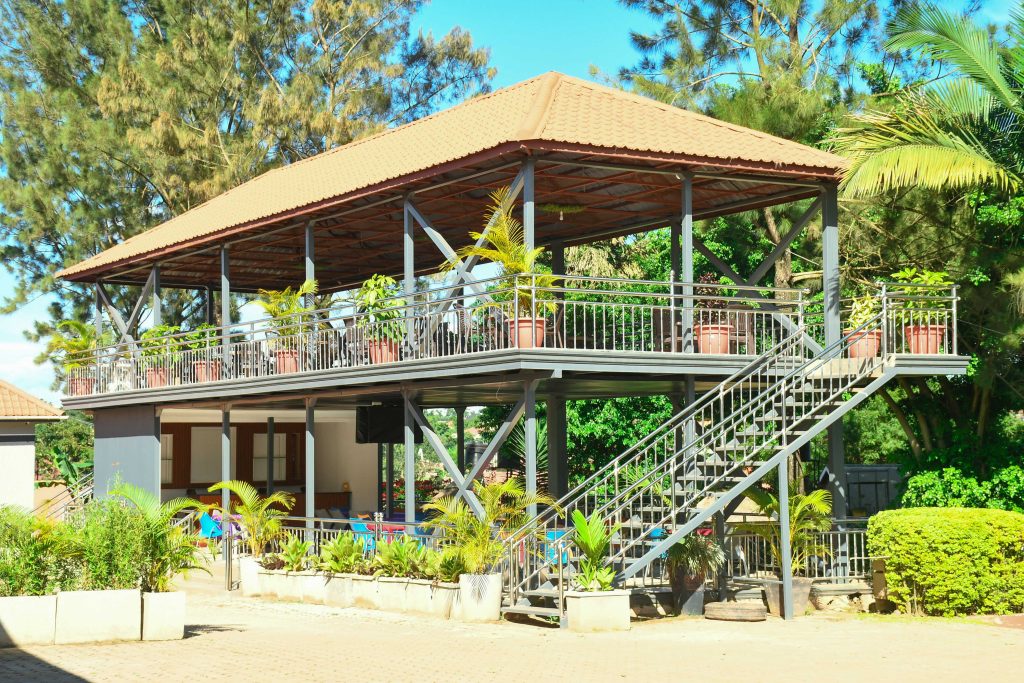
WordCamp Mukono 2026 will be hosted at the spacious and prestigious Murs Country Resort in Kigunga, Seeta, Mukono Municipality. The venue offers a variety of amenities and services that make it a beautiful home for WordCamp Mukono.
Accommodation Options at WordCamp Mukono
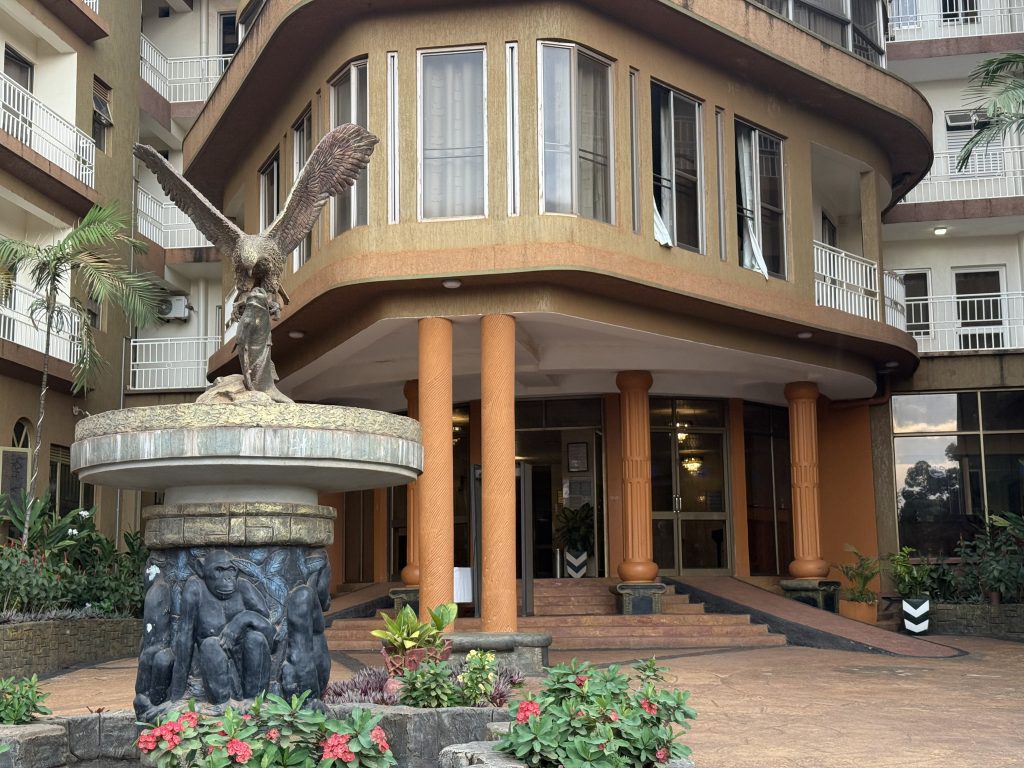
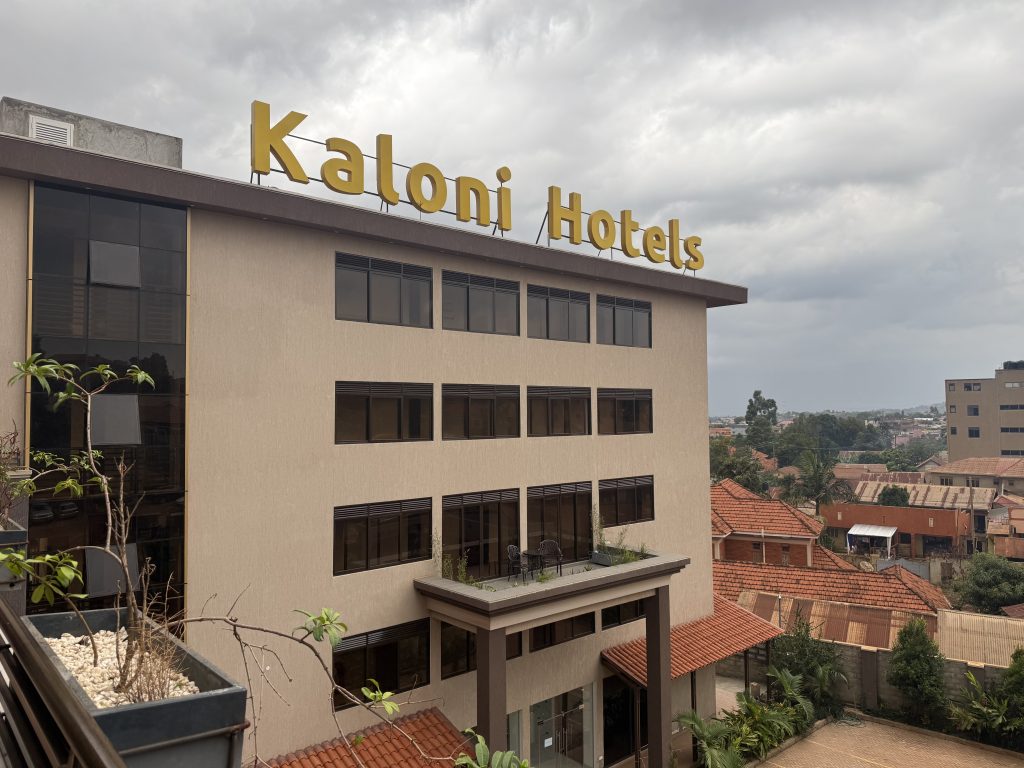
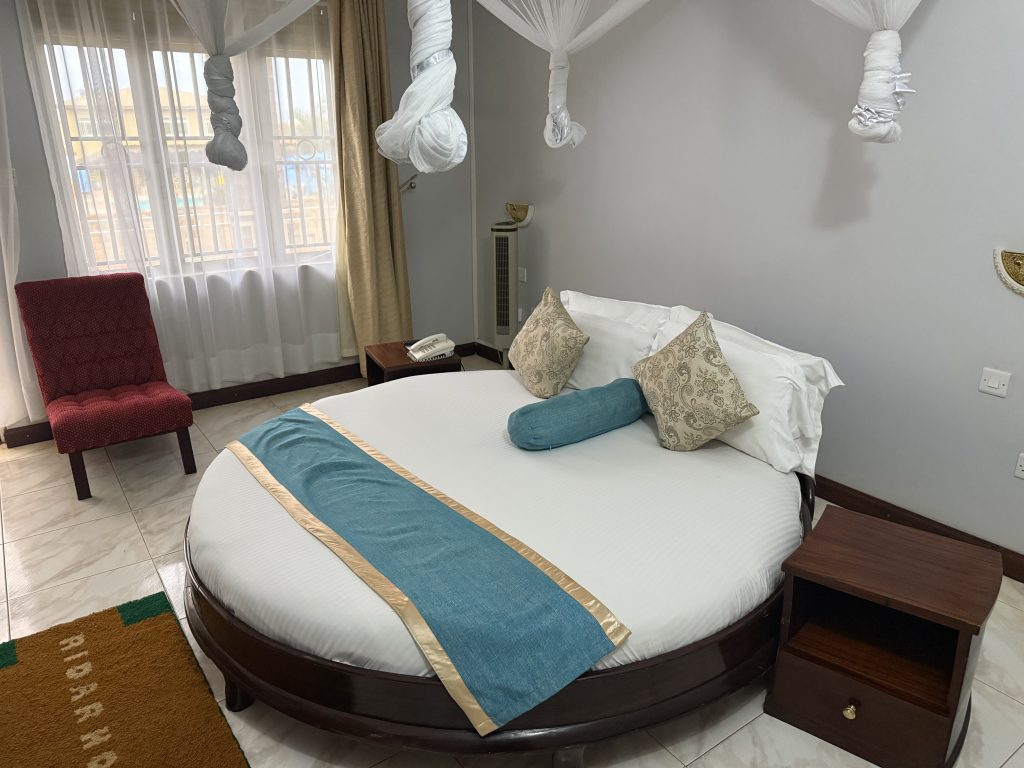
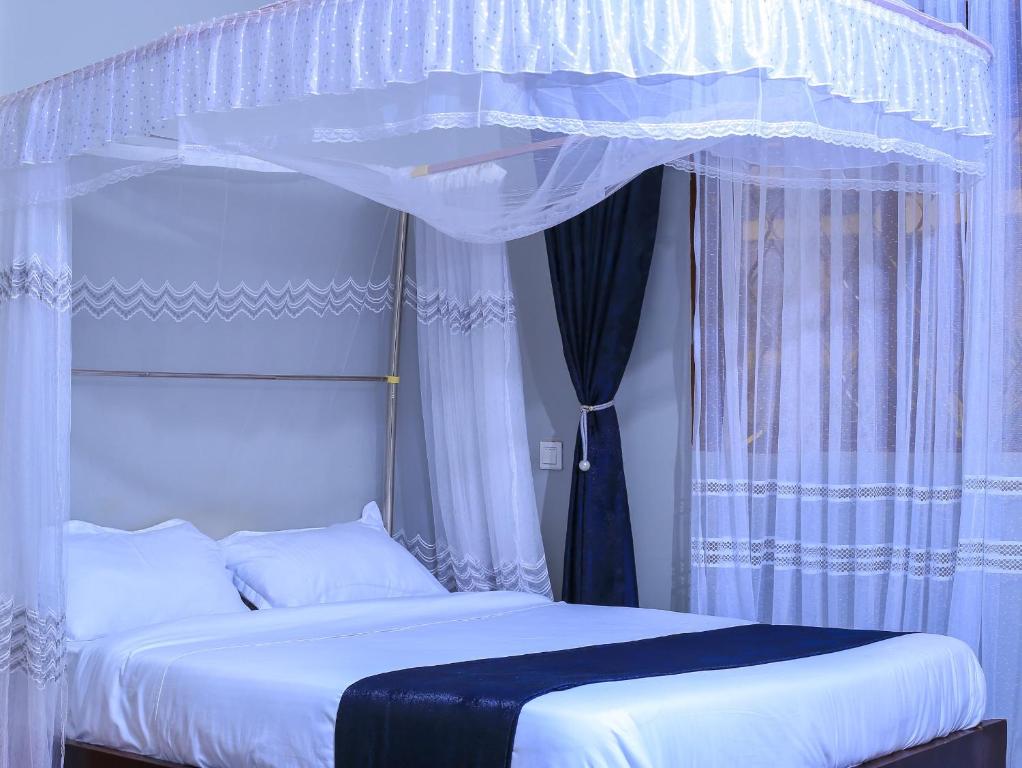
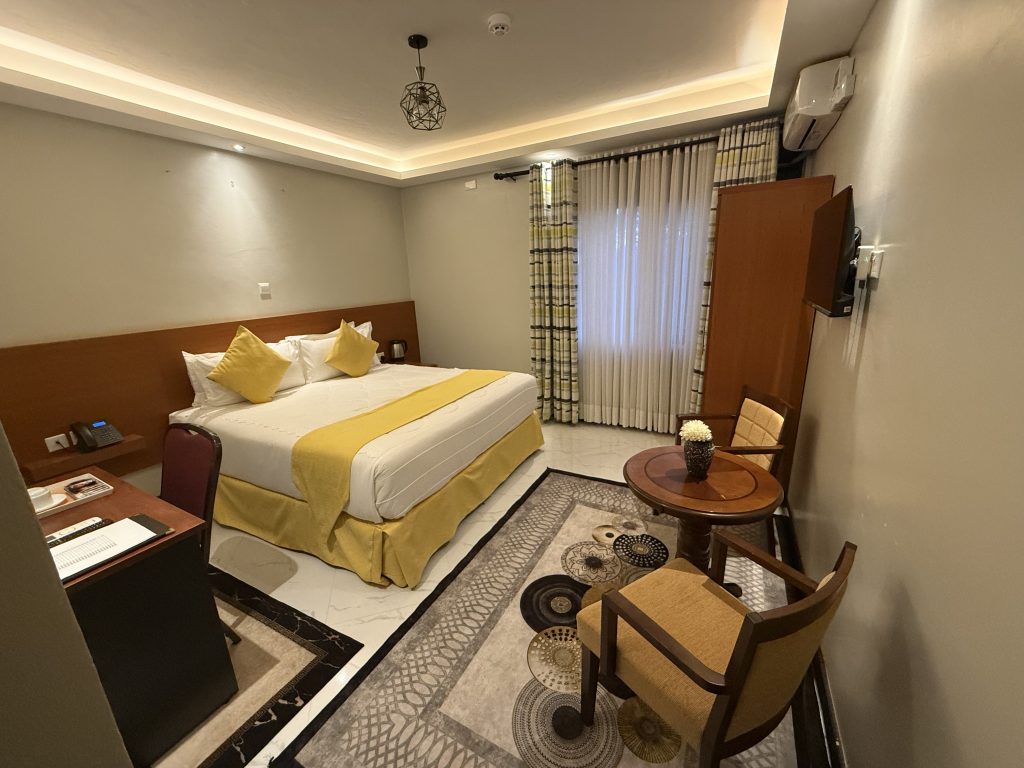
WordCamp Mukono has spoken to several hotels and Accommodation options around the Host venue including the host venue itself and Accommodations have been made available for all attendees.
Details have been shared on the website. Feel free to secure your pick as you see fit.
An Official, Community-Led WordPress Event
WordCamp Mukono 2026 is an official WordPress event, organized by a dedicated team of local volunteers and run as a non-profit. Like all WordCamps, the event is built on the principles of openness, inclusivity, and collaboration.
Over two days, attendees will participate in talks, workshops, and networking opportunities designed to foster meaningful connections and long-term contributions to WordPress.
Get Involved
Calls for speakers are open to any one with a brilliant idea they would want to share, and the sponsor call is also open. An event of this magnitude can only be made possible by the many generous individuals who contribute to open source and community initiatives. The volunteer call is now closed, and the event is already taking shape.
Ticket Sales are now open for this great experience and are the main talk on the streets. Community members from Uganda, the East African region, and beyond are encouraged to take part and contribute to an event focused on building a sustainable future for WordPress. Have no excuse! Book your space now!
Community partners are also allowed to sponsor people to get this great experience by buying a ticket for them. Sponsoring them fully or partially. Contact the Team for details
More details can be found on the official WordCamp Mukono website and on WordCamp.org as they become available. Kindly also check the Blog Section for live updates on the event.
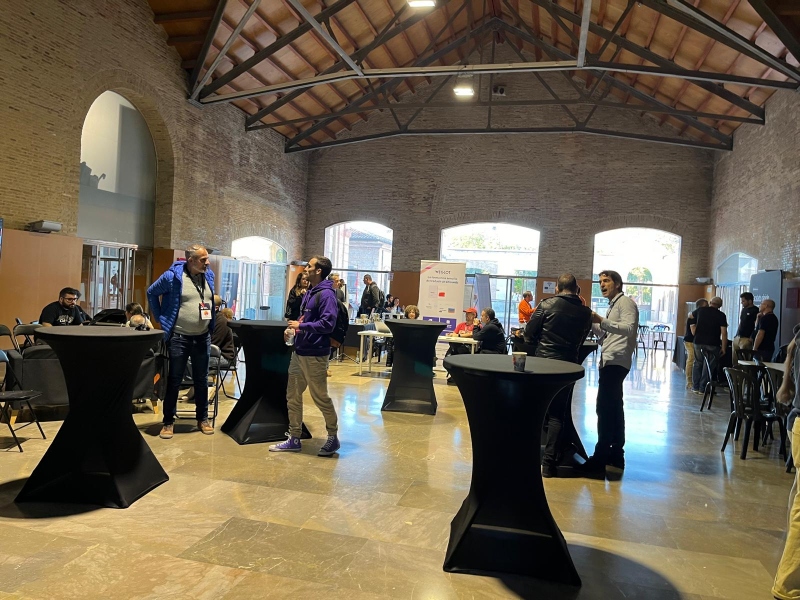
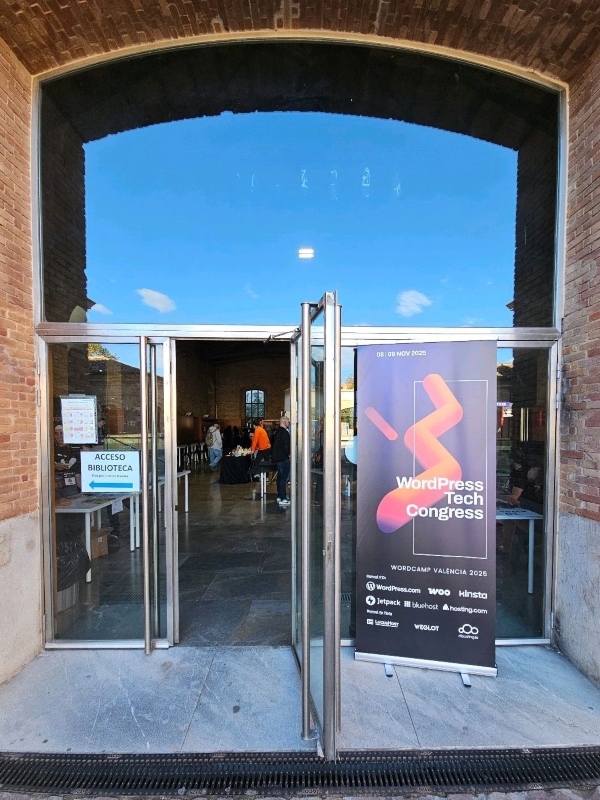
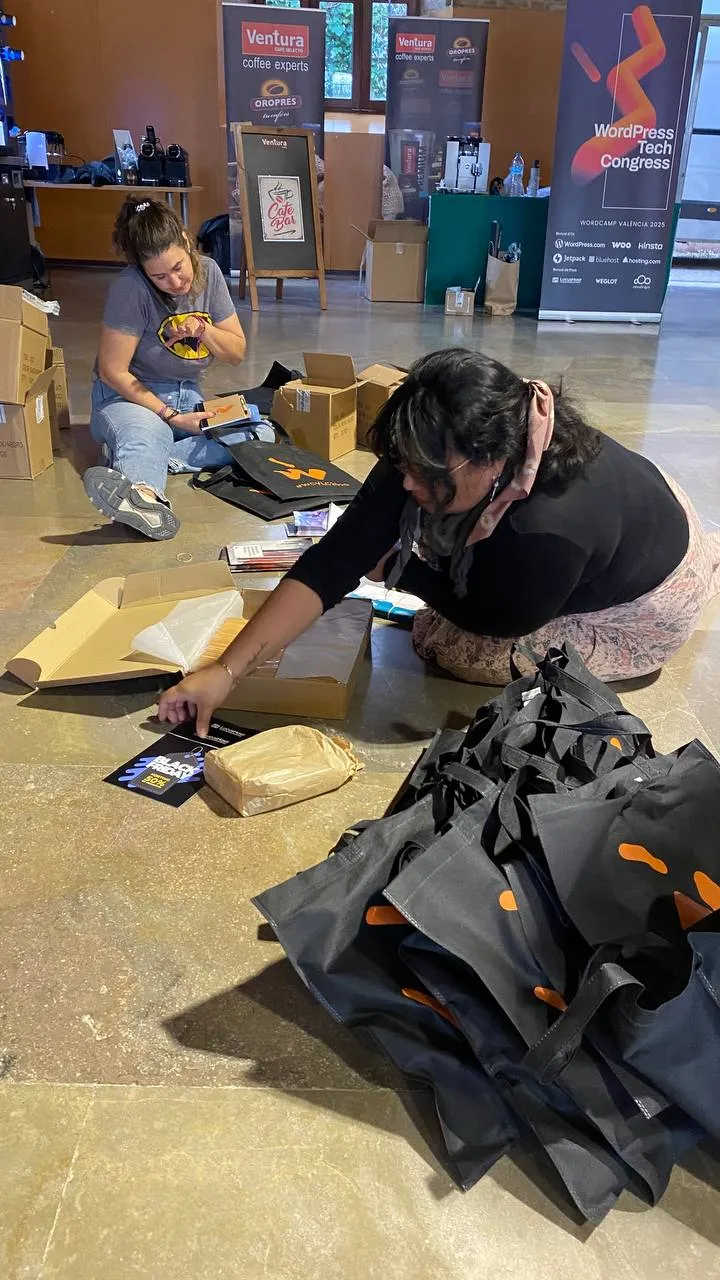
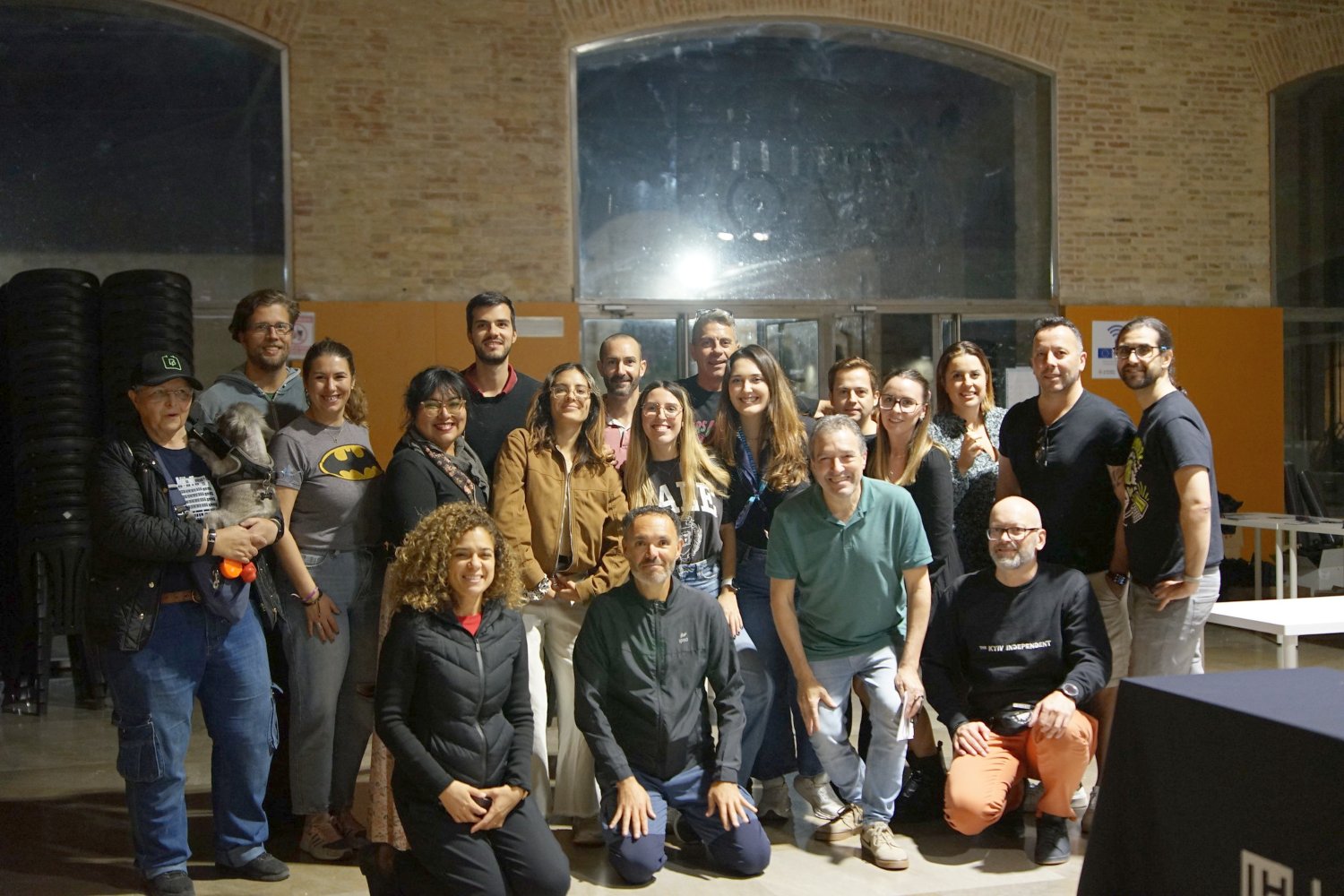
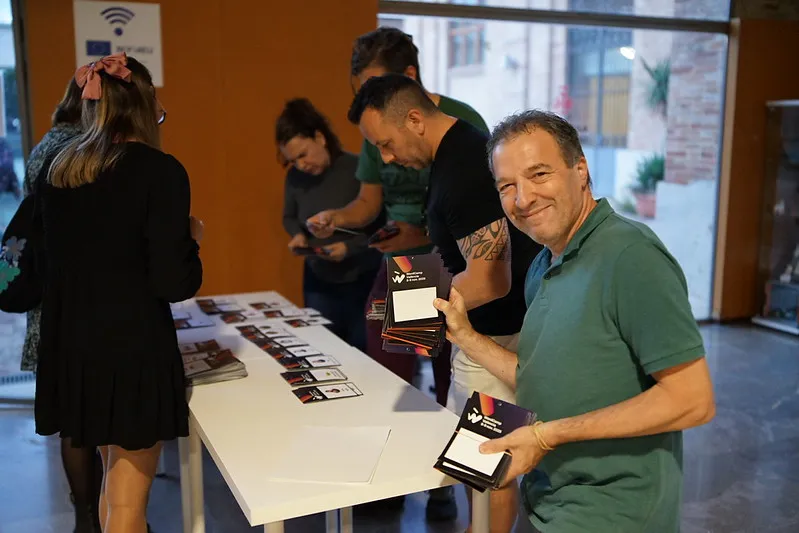
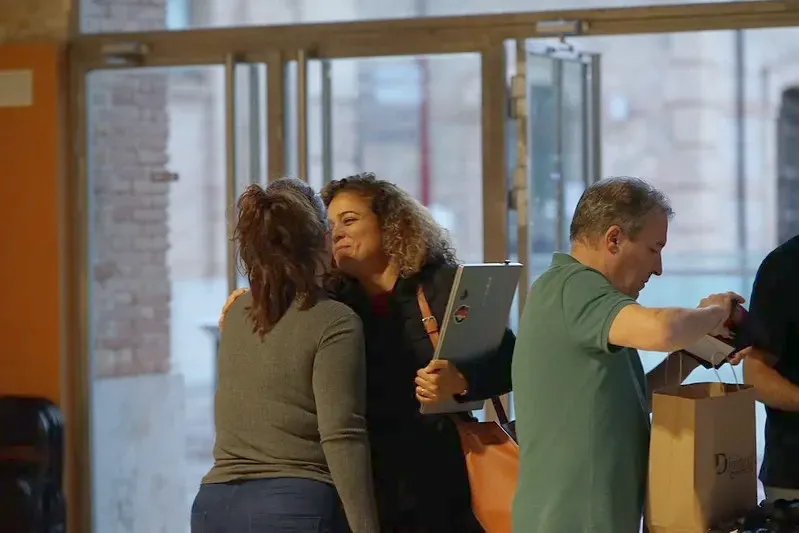
“Good morning! Welcome to WordPress Tech Congress, WordCamp Valencia 2025!”… And that’s how I began my opening speech at this fifth edition and last WordCamp of the year in Spain, held from November 8 to 9 at the La Petxina sports and cultural complex in Valencia. It was an honor to be the team leader, and I’m truly proud of what we achieved. It was an unforgettable experience in which I had the opportunity to design the event together with a great team of passionate organizers, speakers, and volunteers. In this review, I’ll tell you the details, illustrated with numerous photographs. If you were there with us, you’ll be able to relive the memories, and if you weren’t, you’ll now see how we lived that day. Let’s begin, this WordCamp is yours!
Parte del Equipo de WordCamp Europe 2026Organizadores y Voluntarios
What is a WordCamp?
WordPress is an open-source CMS used by 43% of all websites. It is distributed under the GNU General Public License v2 or later. It has a very meaningful mission: “to democratize publishing on the web”, which becomes even more relevant in a digital world where more and more platforms use opaque algorithms that decide how we consume content and exploit our data in ways that are far from ethical. WordPress supports an open and neutral web, a web that belongs to people and gives us the freedom to create and share.
One of the driving forces behind WordPress is its community. A global ecosystem made up of hundreds of people who collaborate with their dedication to develop it and help it grow. And a WordCamp is the conference organized by the community, whose organizers and speakers are all volunteers. We get together with the purpose of learning, collaborating, networking, and also growing the community. During these days, we greet old acquaintances, interact with new people, collect swag from our fabulous sponsors, and eat. These are very special events, with a different feel from commercial conferences because of their family-like, collaborative nature. Everyone is welcome.
Talks and speakers
And that spirit was exactly what we experienced at WordCamp Valencia 2025, which, during that weekend, became the epicenter of WordPress in Spain. This year, under the title “WordPress Tech Congress”, we talked about current technological topics in the WordPress ecosystem, its tools, and associated disciplines.
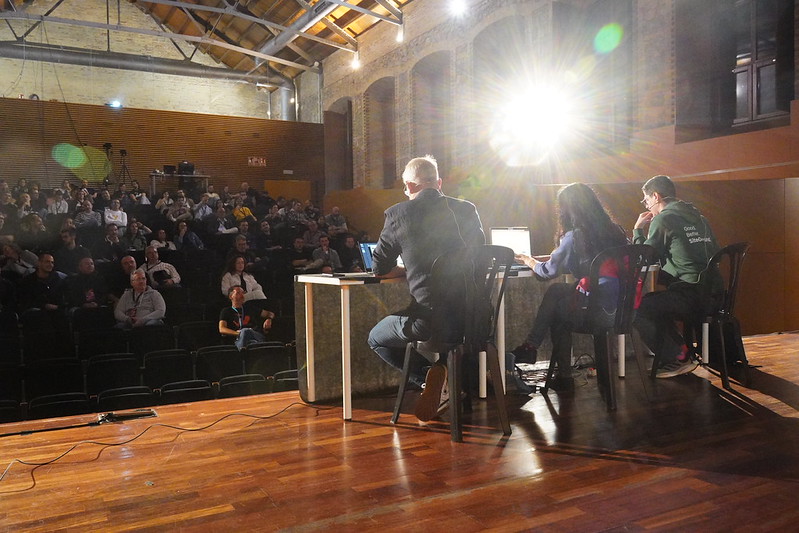
In total, we had 20 long talks, three of them in English, the Light Talks format, the Speed Builder Game, and Contributor Day. We had an incredible line-up of speakers, experts who shared their experience and delivered talks of truly outstanding quality. In the reviews posted later on social media, attendees spoke of the WordCamp as a “shot of inspiration” and highlighted that “the WordPress community is more alive than ever”.
The content was organized into several categories, one of the main ones being web development. The speakers dug deep into WordPress from the perspective of senior developers.
One of our major talks was given by Ivelina Dimova, titled “Prototyping Intelligent Features for WordPress”. Ivelina is a senior WordPress developer. She has a long history in the WordPress Community and is one of the three team leaders of WordCamp Europe 2026, which will be held in Krakow from June 4 to 6. With her participation, she returned to speaking at WordCamps after a break.
She began by telling us about her participation in the Buildathon competition, an AI-only hackathon/competition in San Francisco organized by DeepLearning.ai and Andrew Ng. There, she created 6 applications in five hours using artificial intelligence tools and ended up winning in the Solo category. This experience made her reflect on how application development has evolved: “Five years ago I wouldn’t have been able to be so fast and efficient”, she told us. From this starting point, her goal was to show us how we can be just as productive in the WordPress ecosystem. She showed us specific tools, how to use them, and a TDD approach adapted to the WordPress ecosystem. In short, she shared the process of how to prototype intelligent features for WordPress, updating us with methods and tools that reveal a new era in web development.
Within this category, there was also a talk with an important piece of news by Fernando Tellado, founder of AyudaWP, very well known in WordPress for his long track record of collaboration. Fernando submitted six talks to the WordCamp, but we contacted him and asked: “Can you talk about the changes in wp-admin and bring us the latest news to the stages of WCVLC25?” And Fernando accepted!
He explained the reinvention and “The future of WordPress wp-admin”, which has gone years without significant changes. To do this, he interviewed Matías Ventura, lead architect of Gutenberg, to bring us fresh information about it. In thirty-five minutes, he explained the new vision, the three pillars of the redesign, the impact for users, and the current status of the project. A big and necessary change because, as Fernando says, “…that the machinery (referring to WordPress) underneath (page builders and dashboards) adapts to our current ways of using the internet: it’s no longer a web of clicks, but a conversational one”. To conclude, he called for participation in building the project.
“It’s your time to contribute. Now is when your voice matters. These changes will affect millions of users. Share your experience, test the prototypes, and help shape the future of WordPress”.
In this category we also had: Sulema Rocha with “From zero to WordPress site in seconds: real productivity with WP-CLI”; Juanma Garrido with “Expanding core blocks with frontend interactivity: HTML API and Interactivity API”; Álvaro Gómez with “WordPress MCP + Abilities API: Talk to your Website”; Fernando Puente with “Evaluating a cache system. Intermediate-Advanced” and Andros Fenollosa with “SASS, the preprocessor that survived the CSS apocalypse”.
Another attractive blocks for the audience was SEO & AI or traffic. Nowday, access to online content no longer depends solely on search engines. Many other entry points to the web also generate traffic and visibility. That’s why SEO experts have begun to add and study the process of discovering websites and content through new Artificial Intelligence tools.
We had Natzir Turrado on the WordPress stage for the first time with his talk “From SEO to AX: prepare your website for agentic traffic”. He is a renowned international expert in SEO and data science. His talk was the result of a year’s work, during which he reverse-engineered agents and agentic browsers to understand how they work and what difficulties they have when navigating the web.
He began with illustrative data: +4,700% increase in traffic from GenAI browsers and chat services to retail sites in the USA; a 9.4% drop in human traffic because people are already interacting directly with AI interfaces; and increasing bot traffic. Natzir explained that websites are no longer only consumed by humans, but also by artificial intelligence agents that browse them, interpret them, and act on them. He told us what these agents actually need to complete tasks, what their weak points are, and how to optimize our websites so these agents can “read”, “understand”, and “use” them.
We also had Dani Leitner with “The real future of our websites: What your SEO agency doesn’t want you to know”, a relevant topic for web designers and developers. Dani is an independent SEO consultant specialized in the DACH market (Germany, Austria, Switzerland). She is passionate about WordPress and organizes the WordPress Meetup in Zürich. She was an organizer of WordCamp Europe Basel 2025.
She started her talk by showing two possible scenarios for the future of the web: the first, with a screen and a chatbot so that the user “navigates” by means of conversations, and the second, a scenario in which there are no real users visiting websites anymore. A web suitable only for agents, which is all code and has no frontend as such, no design layer, no images. “Given current trends, everything will happen in a chatbot”, — she explains. —“For example, you can already buy on Etsy from ChatGPT, and Google does it with PayPal”. In her talk, she walked us through the change in search systems, moving from keyword-based search to conversational search. She talked about new emerging concepts and acronyms, such as LLMO, AEO, and GEO, which are linked to how machines, AI, and agents interact with websites. She recommends anticipating the new purpose of a website: not only to serve human-to-human content, but also to be ready for agents, assistants, and automated workflows that “talk” to the website.
A particularly interesting talk was given by David Ayala with “How to get ChatGPT and Google’s AI to recommend you”, once again impressing the audience, who sat on the stairs of Track 2 to listen to him.
The Digital Marketing category stood out for the quality and appeal of its talks. It couldn’t be missing because many companies use WordPress to build the platforms that will later be key sales tools. Let’s see who took part in this category:
Pablo Moratinos, with “From funnel to flywheel: How to grow with WordPress”. In his day-to-day work, he leads the Data & Experimentation team at Product Hackers, is a WordPress.com brand ambassador, and co-host of Un Billete a Chattanooga. He is the author of the book “Negocios online. Data driven marketing”, published by Anaya Multimedia. He has a long history of contributions to WordPress.
In this talk, he told us how to use WordPress to implement a “flywheel”. First, he introduced the concept: an evolution of the linear acquisition-conversion (funnel) model into the flywheel approach, a continuous growth system that uses customer satisfaction to generate new sales and referrals, creating steady momentum through three phases: attract, engage, and delight. Then, from a technical perspective, he showed how WordPress is a “true growth operator” because it can implement all the phases on the same platform. He wrapped up his talk with examples. A very clear summary of WordPress’s power in digital marketing and how to save resources by having everything on a single platform.
We also had Miguel Florido and his talk: “Connect, convince, convert: The power of in-person conferences in sales”. He is the director of Escuela Marketing and Web, where he teaches specialized training in digital marketing and AI, and he is the founder and director of DSM, one of the largest Digital Marketing and AI conferences held annually in Madrid and Valencia.
It was a technical talk about how to organize a conference, which he explained through his personal and professional experience in marketing. He presented a roadmap with 7 essential points: 1. Alignment with the product, 2. Cost analysis, 3. Choice of speakers and venue, 4. Sponsorship, 5. Ticket types, 6. Event promotion phases, 7. Strategies to sell a product or service. He also showed the tools used to execute the marketing, including WordPress, and project management resources such as a Gantt chart, among others.
The most interesting thing is that, based on the resources he presented, it seems like an easy and simple process, even though it requires a lot of dedication, commitment, and understanding of the context and goals. He also pointed out the advantages of the in-person format over the digital format: spontaneous interaction, high-quality networking, and shared experiences that have a strong emotional impact. Miguel finished by emphasizing that organizing an event means designing experiences that connect emotionally, convince with the proposal, and ultimately generate business results.
Ricardo Tayar also participated in this edition of WordCamp Valencia 2025 with “5 things you must understand (and do) so that your website truly converts”. He is a renowned professional, CEO of Flat 101, a top web design agency in Spain that uses the BXOp (Business eXperience Optimization) work approach and has already been in the market for 12 years.
He began his talk with the following thesis: “if you don’t understand how we make decisions, you can’t design anything that converts”. From here he recommends understanding what the user/customer really wants and aligning it with the business objective; designing the user experience in a way that facilitates the desired action (flow, clarity, motivation); optimizing the technical and functional elements that facilitate conversion (speed, trust, relevance); measuring and analyzing the right data to understand what is working and what isn’t, and acting accordingly; and implementing changes iteratively and validated against reality, not just “because others are doing it”. He ended his talk by assuring us that at this moment, when there is so much digitalization, humanism is more important than ever: -…“touching the emotional chord, which is an art and not easy at all, is going to be the real differentiator in the coming years”.
Within this category, we also had Elena Tur with “Your store doesn’t end at the checkout: how to retain and sell more with automated email marketing from WordPress”, and Marie-Charlotte Pezé: “Earthquake-resistant content strategies” (in English), focused on content and the cultural and paradigm shift brought by Artificial Intelligence.
We also dedicated a space to Automation, as a category, where we had David Cuesta with “This is how you can use N8N on your website to automate”, an open-source tool that has revolutionized the way we work.
Another proposal with a high attendance was in Web Design. Max Camuñas, for the first time at a WordCamp, talked to us about “Designs that hook in the age of AI: tools, trends, design and strategy”. There was a lot of anticipation around this talk, and some attendees had to stand in order to attend it.
In E-commerce, we had the experienced Lidia Marbán with “Cognitive biases in ecommerce boosted with AI”.
We couldn’t fail to talk about Project Management with the experienced Daniel Primo, the mind behind the podcast Web Reactiva, with “Once you do a POC there’s no Stop: Practical AI to turn ideas into projects”.
And finally, the Showcase category, which was first used at WordCamp US 2024. The goal was to show real and successful examples of WordPress in use. For the occasion, we had Óscar Aguilera, CEO of Grupo StartGo, a digital marketing and web design agency, and Miguel Ángel Montañes, its CTO, with the talk “Beyond the CMS: advanced engineering with WordPress”.
Their presentation was divided into two parts. In the first, Óscar answers the following questions: Is WordPress a CMS or a framework? Do large companies use WordPress? Is WordPress secure? Are there projects over 50,000 euros? He gives us the key to defending a WordPress project and answering your future clients. To demonstrate the commercial reach of this CMS, he shares two real proposals, one for 20,000 euros and another for 97,000 euros. In the second part, Miguel, the CTO, walks us through a practical case: the development of a transactional portal for the administrative management of teachers at an educational center. He explains in detail the process and the different methodologies used to create a WordPress-based product that meets the client’s needs. They closed with a powerful message: “WordPress has no limits; the limits are set by us.” What’s essential is not only the software, but also the technical discipline, engineering vision, and strategy behind it.
Light Talks
A very special experimental format. Light Talks are short presentations of around 10 minutes, followed by 15 minutes for audience participation. The five participants are experts in their fields, specialized in creating quality content and skilled at sparking dialogue with their audiences. They are powerful micro-influencers you can follow on their respective channels. Let’s get to know their names:
Yannick: presented “The WordPressero Traffic Light” and moderated the block.
Diego Nieto de la Fuente: with “Order Returns in WooCommerce: How to solve the mess?”
David Carrasco: with “WordPress without Borders: International SEO in the age of AI”.
Jonathan Velez: with “How to set up your workflow system to build websites in WordPress without wasting time (or money)”.
Lucia Rico: with “SEO for AI: what’s coming (and what your WordPress still isn’t doing)”.
Thank you so much, Yannick, Diego, David, Jonathan, and Lucía, for taking part and making it possible to implement this format. You are great communicators, and you work day in, day out, directly with your audiences. The attendees really enjoyed interacting with stars like you.
Speed Builder Game
And to close the day, we had Jamie Marsland, director of the WordPress YouTube channel, with this fun format. It was the first time it came to Spain, and we welcomed it with great excitement. The session was held in English and Spanish. We got to see his two contenders, Taisa, a web designer, and Fran Fernandez, a web developer, recreate the following website live and in 30 minutes: KOBU.co.
Jamie started out recreating popular websites on his YouTube channel as a personal experiment: “I had been recreating famous websites in 30 minutes”. From there, he had the idea of turning it into a competition: “What if two people compete to build the same website in 30 minutes?” That’s how the Speed Build format was born. The challenge has now gone to the stages of events such as WordCamp Europe, WordCamp Asia, and other WordPress conferences, turning it into a piece of live entertainment, with a visible countdown and direct audience participation.
It was an exciting session, with applause and nerves. In the end, both of them managed to recreate the website with the help of several technologies, including AI.
Thank you so much, Jamie, for bringing your format to WordCamp Valencia 2025. Your presence at our event made it more international and refreshed it with a totally new format on our stages.
Contributor Day
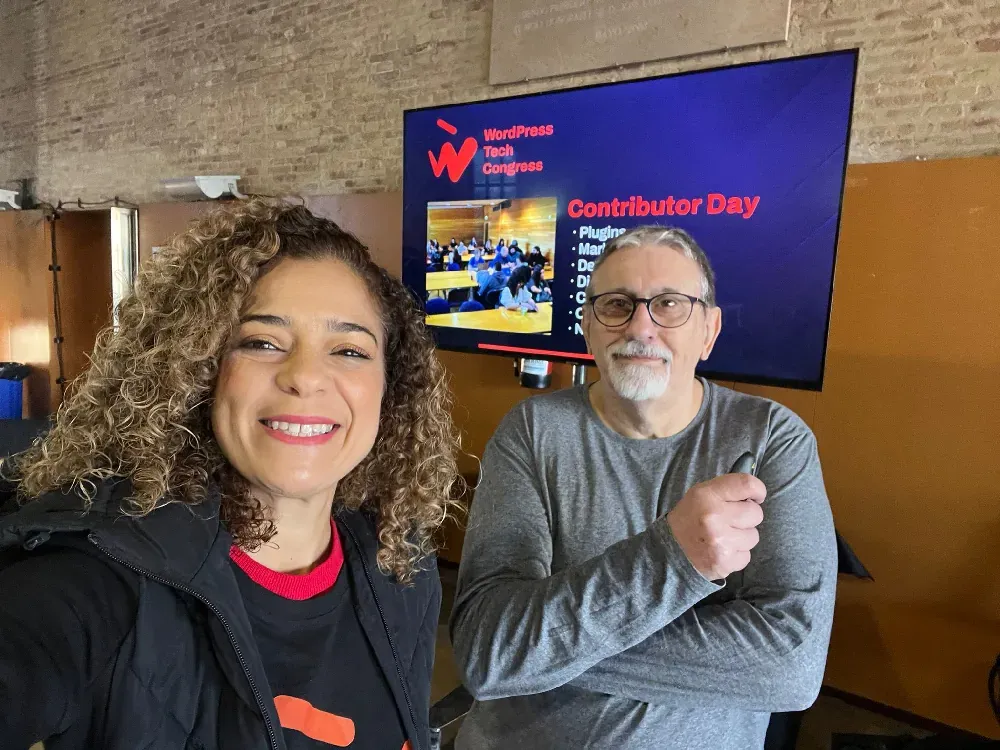
Contributor Day is a day on which we collaborate with WordPress teams, the ones that usually work remotely. During this day, they get together and work in person. In this edition, it was held on Sunday at La Pechina itself. The driving force behind this meetup was Luis Miguel Climent, who focused it on making it easier for new contributors to get involved.
A detailed explanation was given about the following teams:
Plugins, represented by Francisco Torres.
Marketing, represented by Carla Pumutxa.
Development, represented by Juanma Garrido.
Photo Directory, represented by Roberto Vázquez.
Campus Connect, represented by Álvaro Gómez.
Community, represented by Luis Miguel Climent.
Afterwards, they gathered at their work tables, and participants’ questions were answered. At the end, a recap of the session was done, and follow-up will be carried out with the interested people to help them complete their onboarding on WordPress.org.
Kids’ area
This year, there was a major innovation at WordCamp Valencia 2025: the kids’ area, which welcomed families. Five speakers were able to attend because they had a place to leave their children, and several attendees joined because they were also able to balance childcare with attending the conference.
It’s the first kids’ area at WordCamp Valencia. This service is becoming essential for all WordCamps. At this point, more than half of the ones held in Spain and WordCamp Europe have a space for children.
Welcome, families, welcome kids, they are our future!
If the family gets together, we eat. Traditional Valencian cuisine
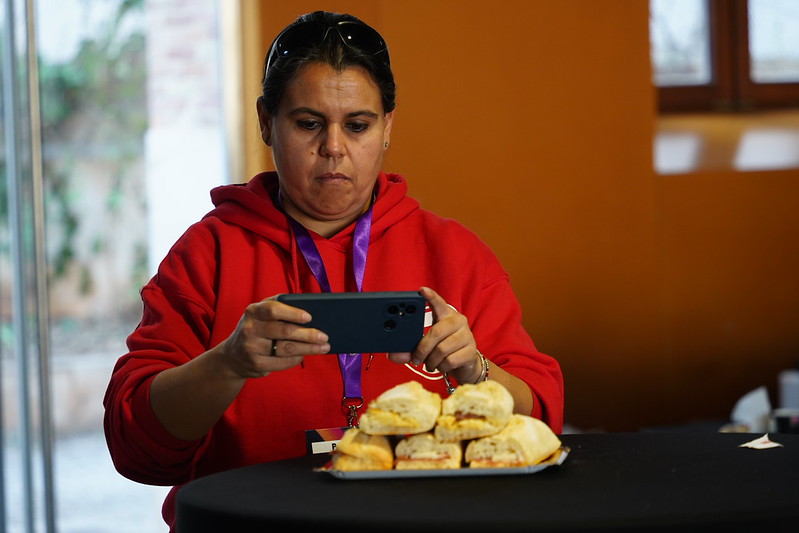
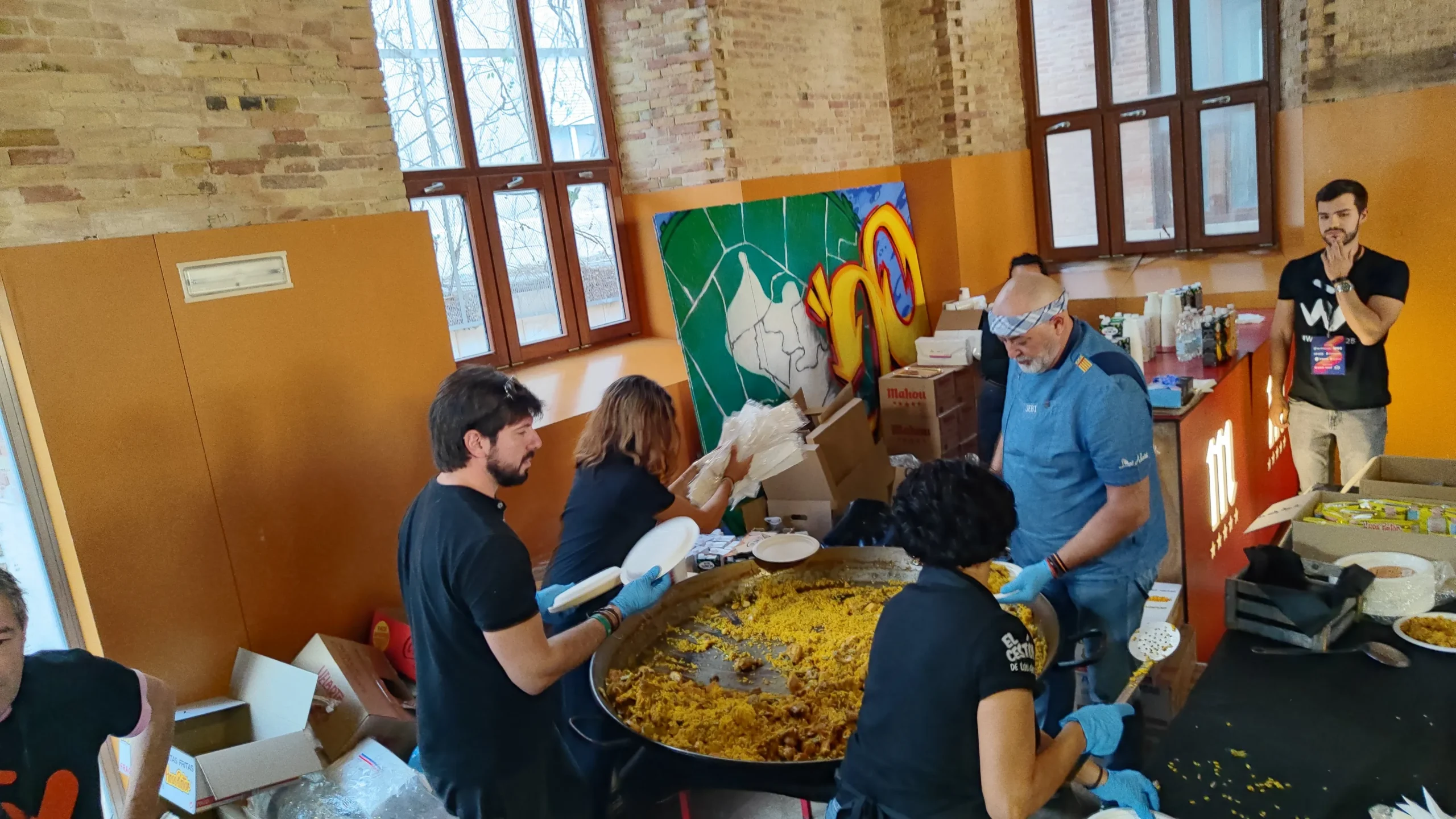
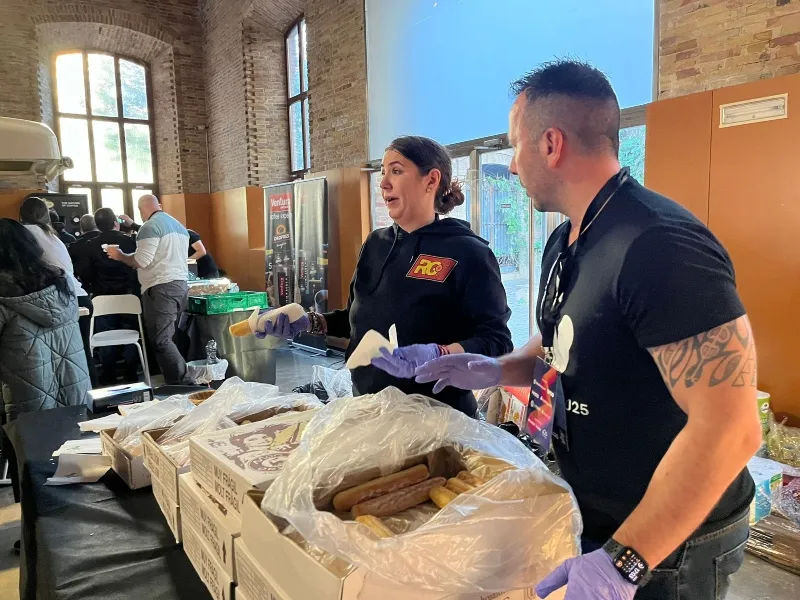
At every WordCamp in Spain, they offer some local culinary delights. In this case, our theme was traditional Valencian cuisine. We offered pastries, baked goods, and sandwiches from a local bakery, traditional rosquilletas, a delicious paella prepared by master paella chefs, traditional horchata, and fartons. To finish, pizza.
A reward for all the work involved in managing the food side, was the comments from the attendees. For some, like Sofía Ruiz, linked to the Logroño Meetup and WordCamp, it was the first time tasting horchata and fartons. Some speakers referenced the food on stage, like Natzir Turrado, who was drinking horchata during his talk and referred to it as a remarkable beverage. Also, Ricardo Tayar commented that the food was great, with the typical Valencian ice cream cone to finish. We love knowing that after this WordCamp, they now know the taste of Valencia.
A WordCamp with tradition
WordCamp Valencia now has its own tradition and a unique stamp that has been built over time through the work of the teams that brought previous editions to life. A tradition that we proudly showcased. Once again, we chose La Pechina, that emblematic jewel of Valencian architecture, which has become the venue par excellence for our last three meetups. We also continued with the name “Bunyol”, a delicious Valencian treat, to identify the sponsor levels. Likewise, we kept the foundation of the corporate identity, preserving the color orange and reinterpreting the logo and posters. It has been an honor and a challenge to maintain these details that give it a unique distinction: that of WordCamp Valencia, that of each and every one of those who have contributed over the years.
Team
WordCamps all over the world are possible thanks to the volunteers behind them. We prepared this event with a lot of care and excitement, with the goal of bringing the community together, learning, attracting new WordPressers, and continuing to build open-source WordPress. For ten months, we dedicated many hours of our free time to completing the project. We learned, corrected, solved problems, innovated, and finally saw our WordCamp come to life.
Let’s meet the people behind the scenes: Lena Iñurrieta, Gustavo Galati, Luis Miguel CLiment, Clara Fayos, Cesar Labadia, Luis Francisco, Toya Seguí, Ricardo Vilar and Eric Seguí.
Organizadores y Voluntarios
And alongside us, there was a very special figure: the mentor of WordCamp Valencia 2025. We were lucky to have Pablo Moratinos, who accompanied us, guided us, and solved key issues throughout the whole process. He has a long track record in the WordPress Community in Spain and is a benchmark for his experience and commitment. He has an impressive collaboration résumé: he has been team leader at four WordCamps, two at WordCamp Irún and two at WordCamp España Online, and co-organized four, the first being WordCamp Chiclana 2017. To date, he has mentored nine WordCamps, accompanying and supporting organizing teams with professionalism and a clear vision. He came as a mentor and a speaker.
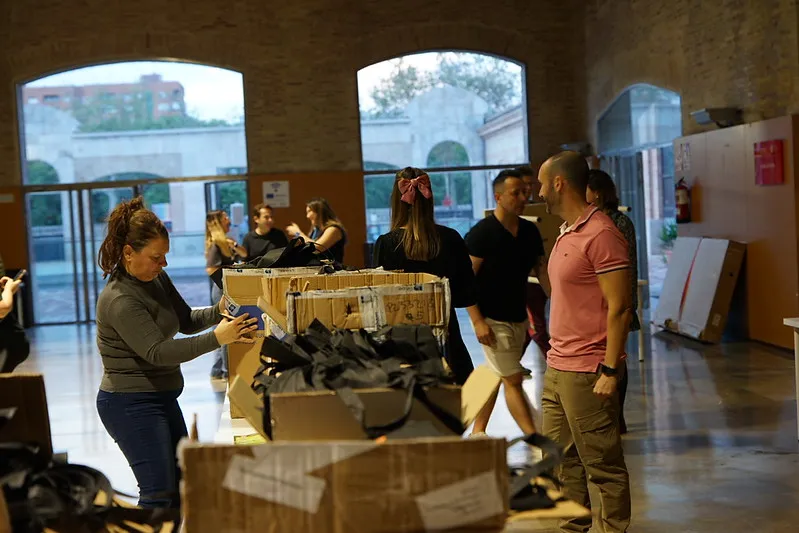
A key piece of this machinery are the volunteers, who travel from different parts of Spain to collaborate and make the WordCamp possible. Many thanks to Anabel López, Andriy Terentyev, Ariadna Santana, Carla Pumutxa, Cristina López, Daria Verdugo, Fran Trapero, Héctor Tellado, José Hilario, Lorsy Turizo, Lua Salazar, Marcin Wosinek, María Fabián, Maribel Haroon, Marlon Veásquez, Mónica Teixeira, Nilo Vélez, Rafa Villaplana, Roberto Vásquez and Ximo Tomás.
Sponsors
Sponsors are an important pillar of the event; they contribute with financial resources and their presence. WordCamps are not commercial events per se. The companies that join do so with the desire to contribute to the community and to connect more closely with their potential customers. In this sense, they bring special promotions and keep a close relationship with the attendees.
Thanks to the Bunyol de Oro and global sponsors: WordPress.com, Kinsta, Hosting.com, Bluehost, Woo, and JetPack.
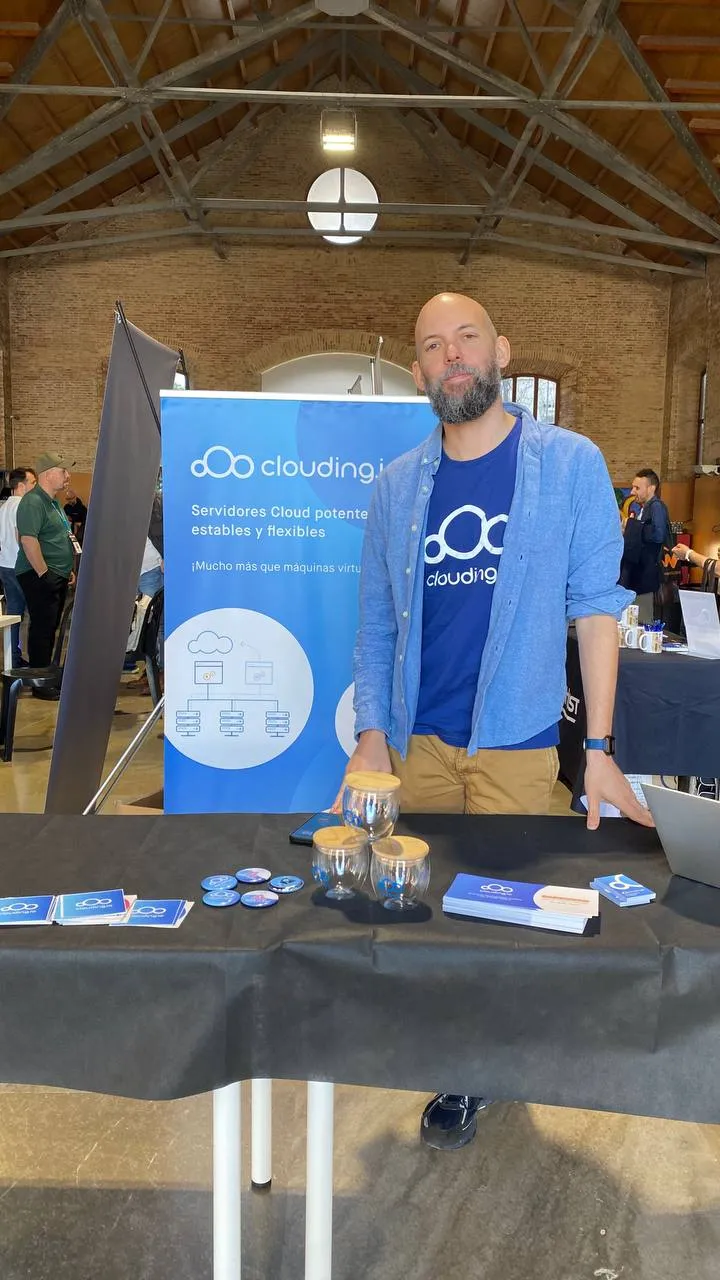
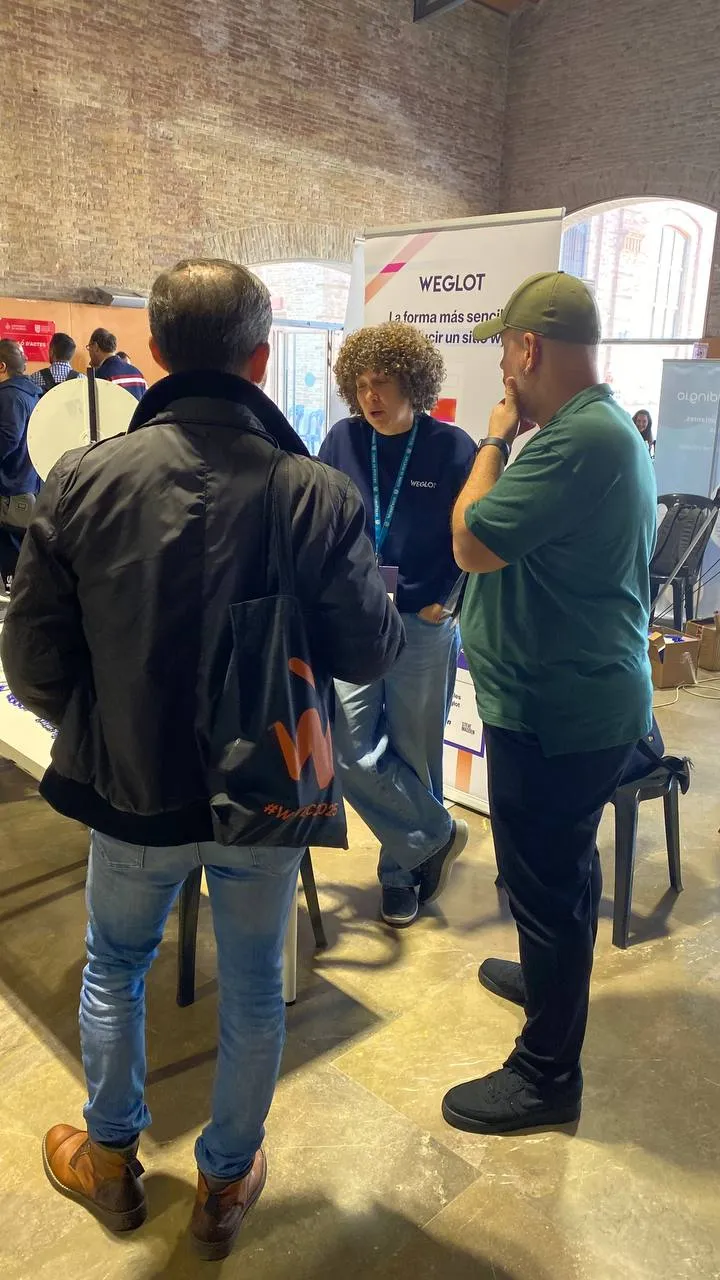
Thanks to the Bunyol de Plata sponsors: WeGlot, Lucusthost, and Clouding.
Thanks to the Bunyol de Bronce sponsors: Raiola Networks and Dinahosting.
Thanks to the Bunyol de Carabassa sponsors: Grupo StartGo, Doowebs, Xufa.es, Zubbun, Tandem Marketing Digital, Datomedia, Acceseo, and GreenGeeks.
Thanks to the in-kind sponsors: Mohou, Café Silvestre, Café Ventura, Stickermule, Velarte, DooWebs, Desafío Digital, Grupo Billingham, SomDigitals, and Mon Orchata.
Thanks to the micro-sponsor: Wayrank.
Thank you for supporting WordCamp Valencia 2025 and making it possible.
Public reception
We had a great reception from the audience, with more than 300 highly engaged attendees throughout the day, creating a vibrant atmosphere full of energy and a strong desire to learn, share, and reconnect. In addition to new faces, the Valencia and Spain community gathered. It was amazing to see everyone together again.
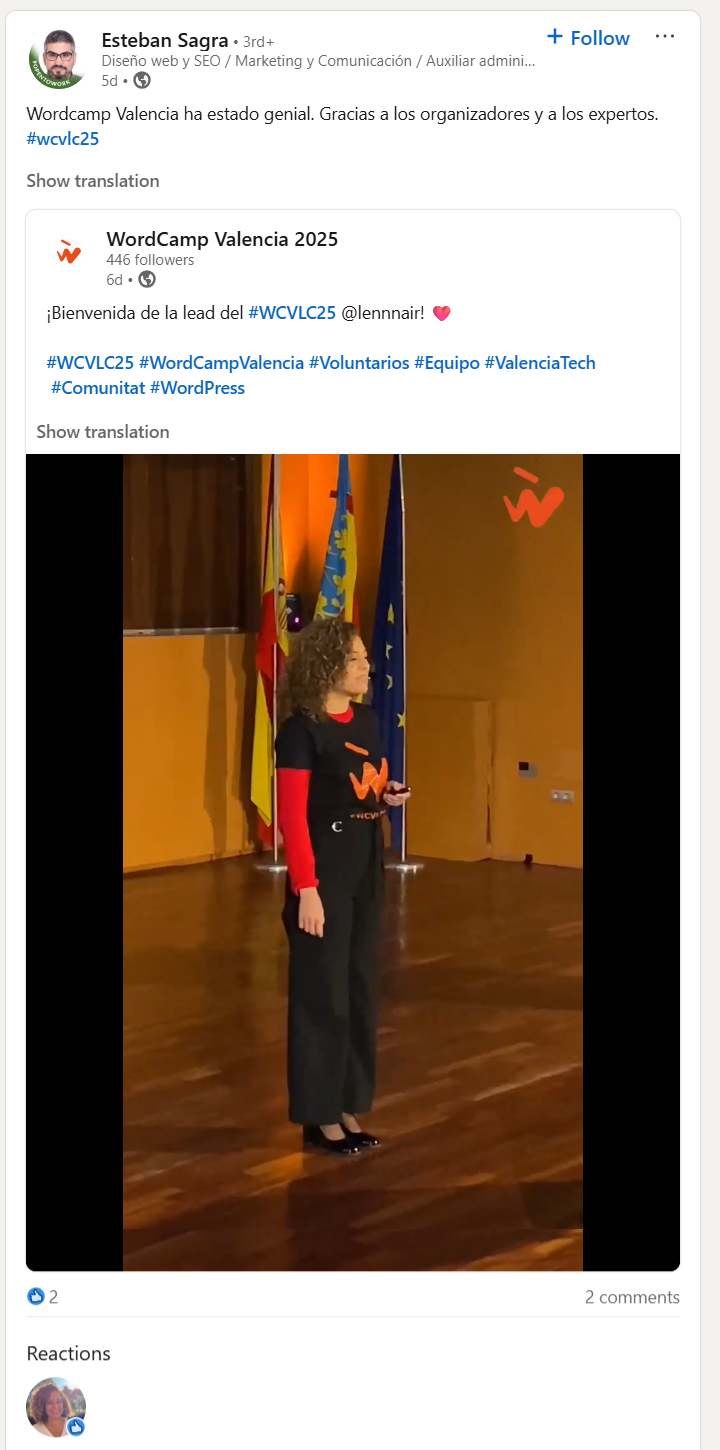
After the event, attendees left many reviews on social media, especially on LinkedIn. Here are some of them.
And so we reach the end of WordPress Tech Congress, WordCamp Valencia 2025. We talked about the latest in technology and WordPress. I’ve told you many details, and I still have some left, but I think you now have a good idea of what that November 8 and 9 was like. We had talks of the highest technical and strategic level, with international speakers. We also innovated with new formats such as the Light Talks, Jamie Marsland’s Speed Builder Game, the director of WordPress’s YouTube, for the first time in the Spanish community, and a Contributor Day focused on expanding collaboration with new participants. In addition, we organized a kids’ area for the first time.
I would like to give a special thanks and send a hug to Pablo Moratinos, the mentor, for his support and help, especially at key moments in the project’s management, to Miguel Florido for his marketing advice, to Enric García from DooWebs and his team, who built the website, to Kike Rodríguez for his help animating the WordCamp poster and his promotional video of the attendee wapuu, to Susana Ibañez for her help as an experienced team leader, to Jamie Marsland, Natzir, Marie-Charlotte, Ivelina Dimova, David Carrasco, Jonathan Velez, Yannick, Rafa Villaplana, Gustavo Galati, César Labadia, Luis Miguel Climent, Clara Fayos, Eric Seguí, Toya Seguí, Luis Francisco, Ricardo Vilar… To everyone, speakers, organizers, volunteers, and sponsors, thank you very much for your work. The WordPress Community has come together once again, and it has been thanks to this collective effort.
I send you a handshake and a hug. I’d like to take these lines to say loud and clear: Thank you so much for taking part in this adventure and making it possible!
This WordCamp was yours, and I hope the magic of WordPress continues.
See you at the next WordPress adventure!
More about WordPress Tech Congress, WordCamp Valencia 2025
I’m writing this post with a smile that refuses to leave my face.
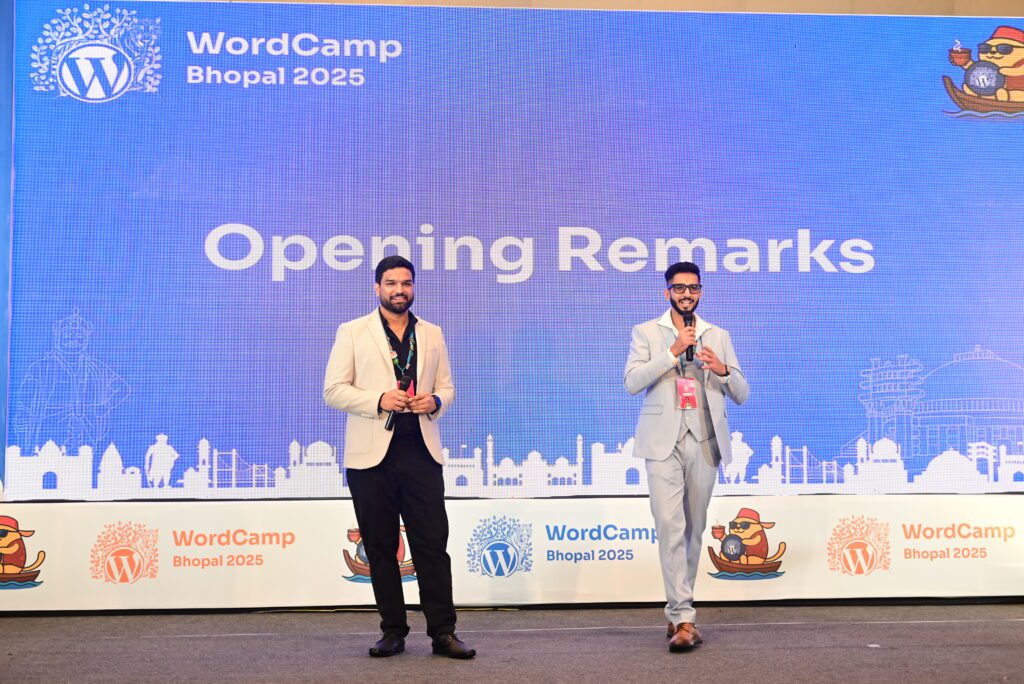
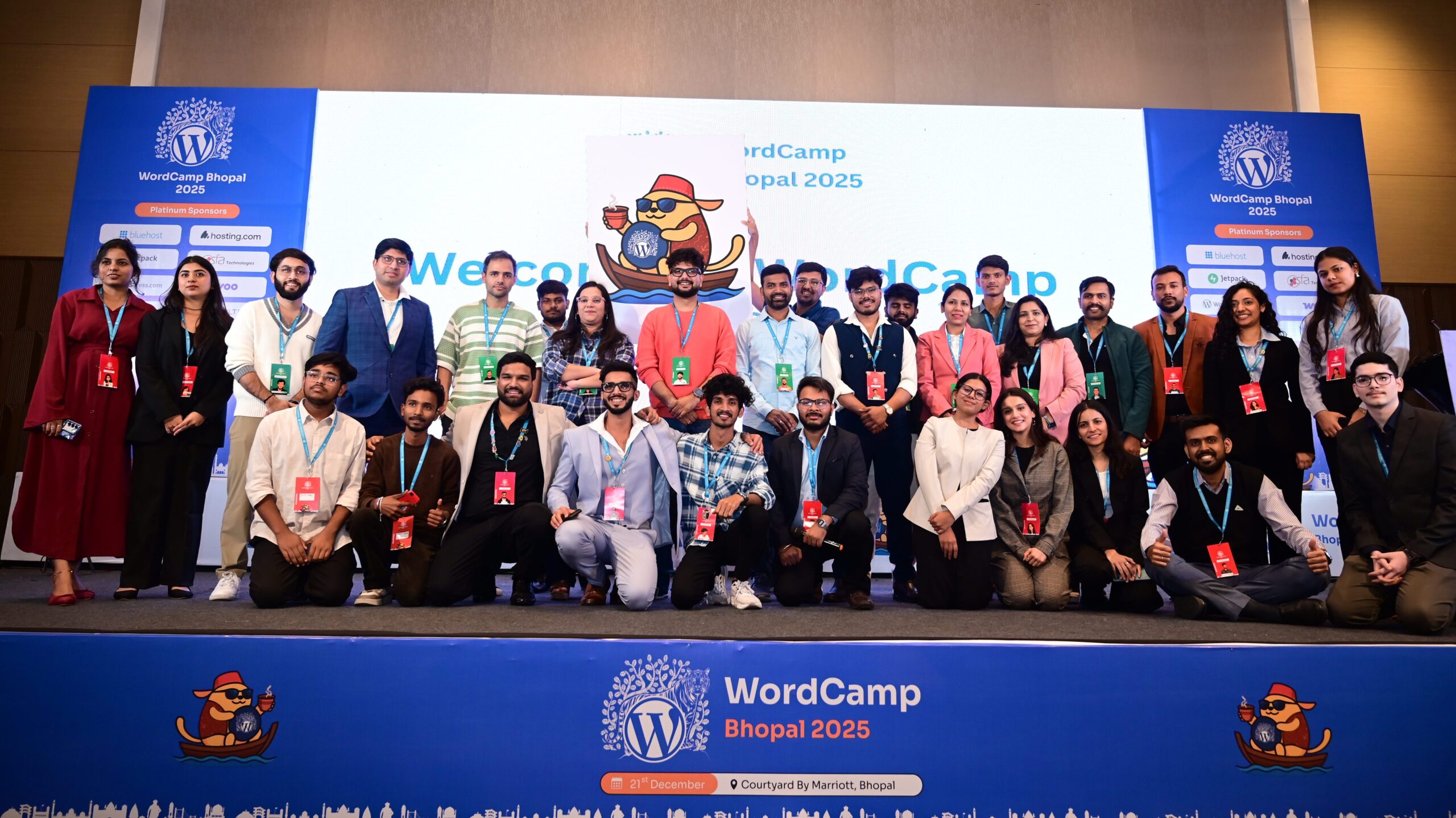
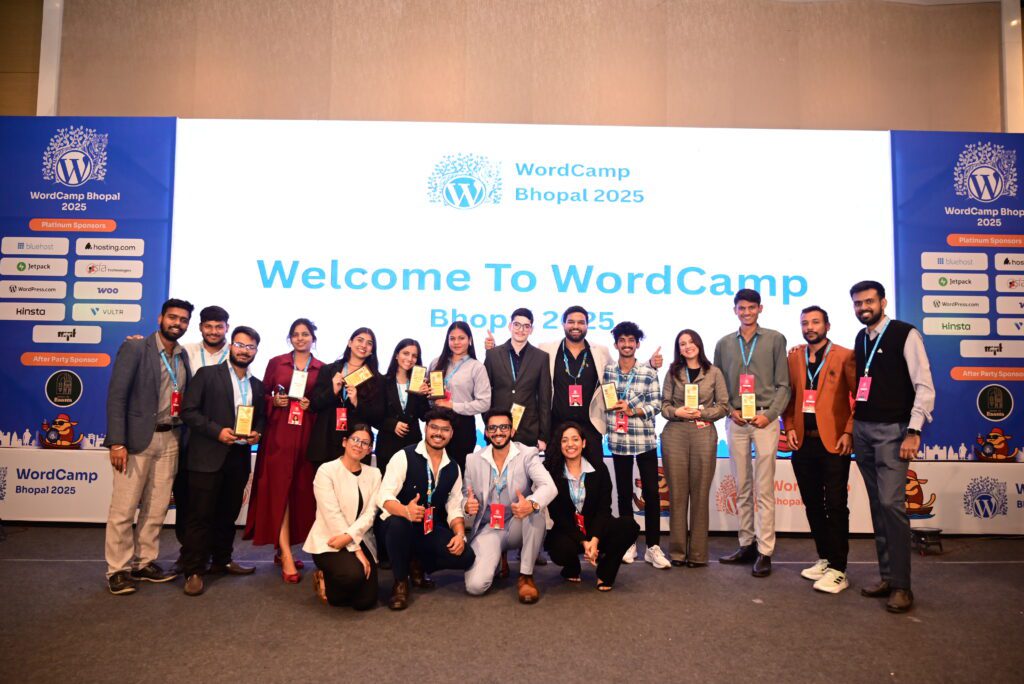
Because WordCamp Bhopal 2025 being a feather in our hat as a community wasn’t just another event on the calendar, it was deeply personal.
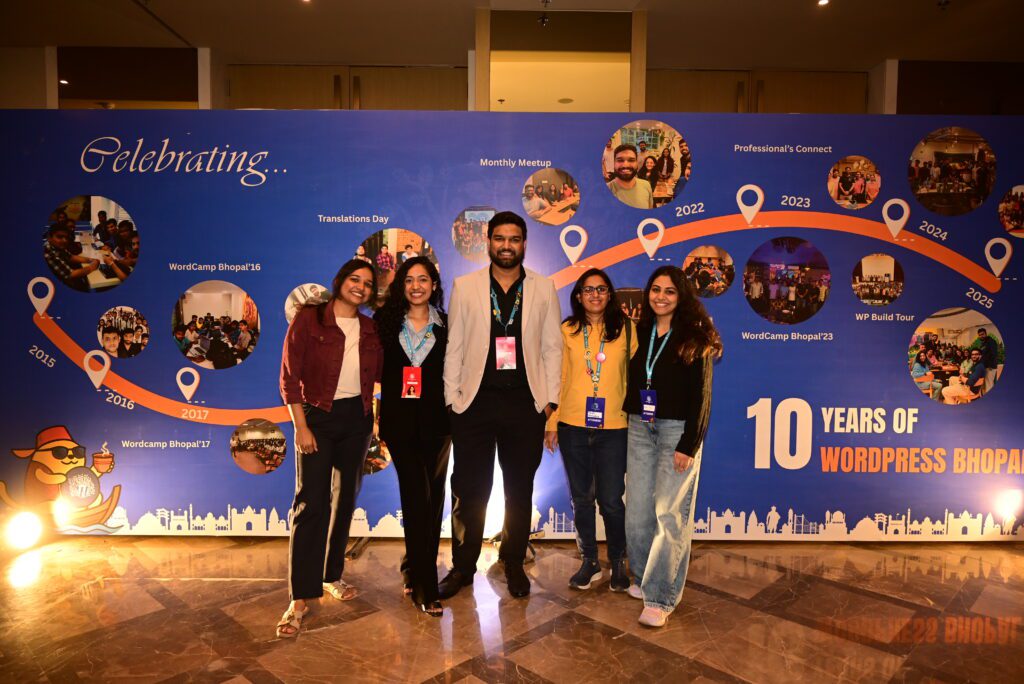
For the WordPress Bhopal community, and for me, it marked something special: 10 years of showing up, learning together, and building something real.
And what better way to celebrate a decade of community than by hosting a WordCamp that truly felt like home?
A Celebration of Culture — Shared Both Ways
At its heart, WordCamp Bhopal 2025 was about culture — built and shared in two directions.
On one side, it was about bringing the larger WordPress and tech ecosystem to the city. Giving our local audience — students, first-time attendees, and curious minds — a glimpse of where the ecosystem is headed, how far it has grown, and what’s possible for them right here.
On the other, it was about opening Bhopal up to the wider community. Welcoming people from outside and showing them the city of lakes, the warmth of its people, and the potential that quietly exists here — in ideas, in talent, and in shared spaces.
This edition was also about quality & thought.
Not scale. Not noise. But an intentional step forward — our way of upgrading how we learn, connect, and host. Because at the end of the day, human connection is the real network.
Laying the Groundwork
Behind what everyone saw on the event days was months of quiet, consistent effort.
One of our strongest pillars was a four-month journey called the WP Build Tour — an initiative across colleges in Madhya Pradesh. Through sessions and workshops, 1,700+ students were introduced to WordPress, open source, and community-driven learning.
Alongside this, staying true to the ethos of inclusivity and diversity, we hosted EmpowerWP Bhopal 2025 earlier in March — a women-oriented event that brought the community closer to home, quite literally.
To keep the momentum going in other community spaces, including DevFest Bhopal, we ran the now-iconic ‘Nano Banana Challenge’ as a fun way to spark curiosity around WordCamp Bhopal, and the entries were astonishing.
We also consciously expanded our reach beyond the WordPress bubble — welcoming marketers, content creators, influencers, and professionals from across the tech ecosystem. some combinations are just better shaken together.
So when WordCamp Bhopal 2025 finally arrived, it carried all of this into the room.
When the Curtains Finally Rose
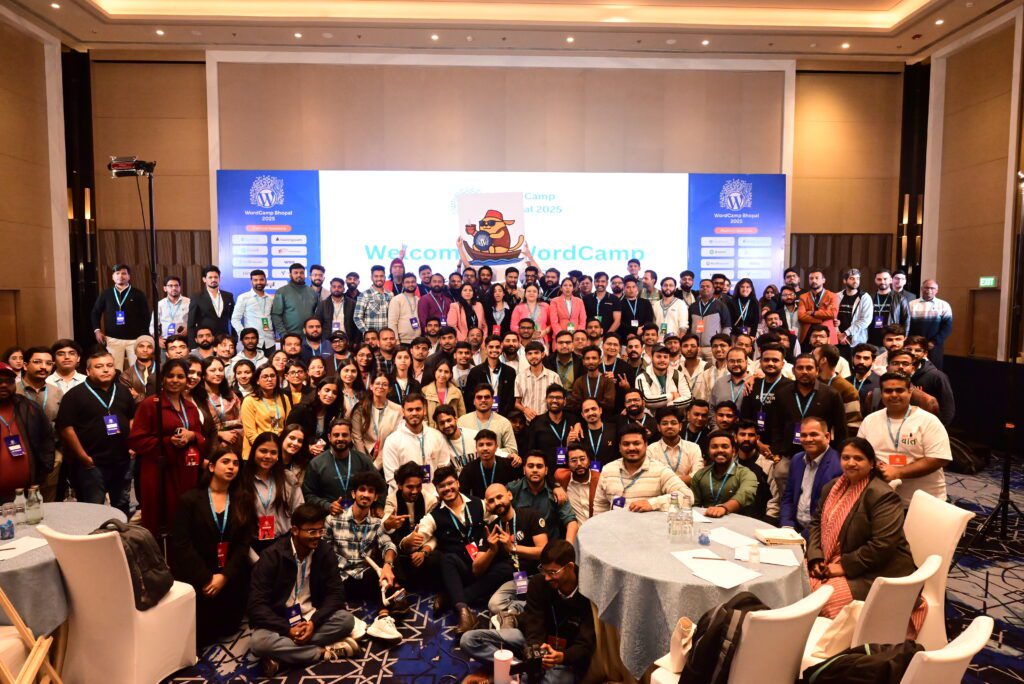
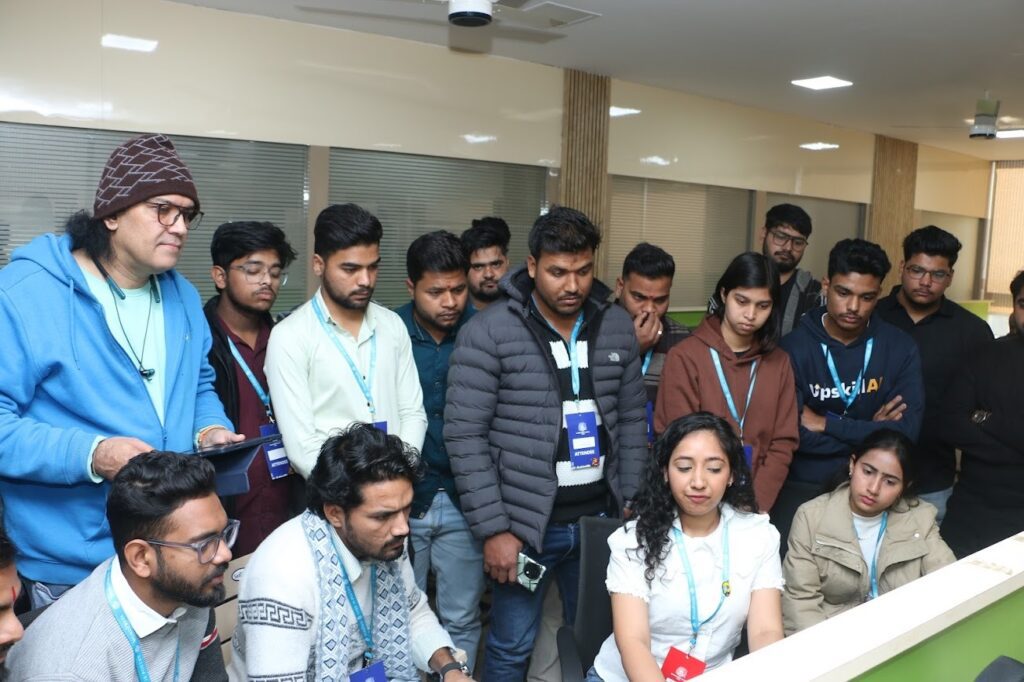
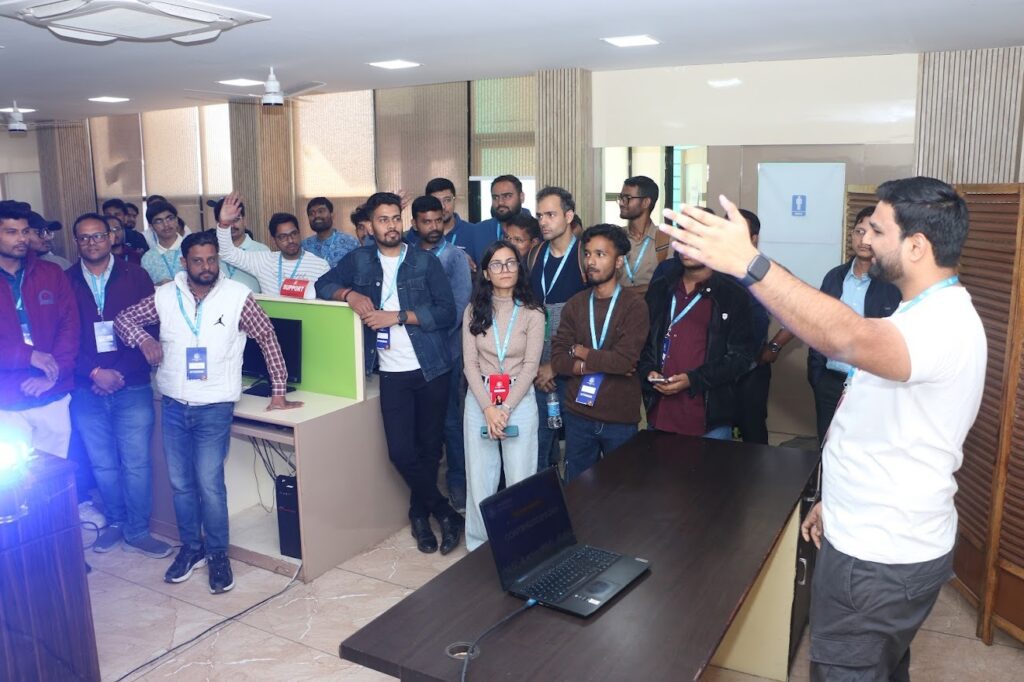
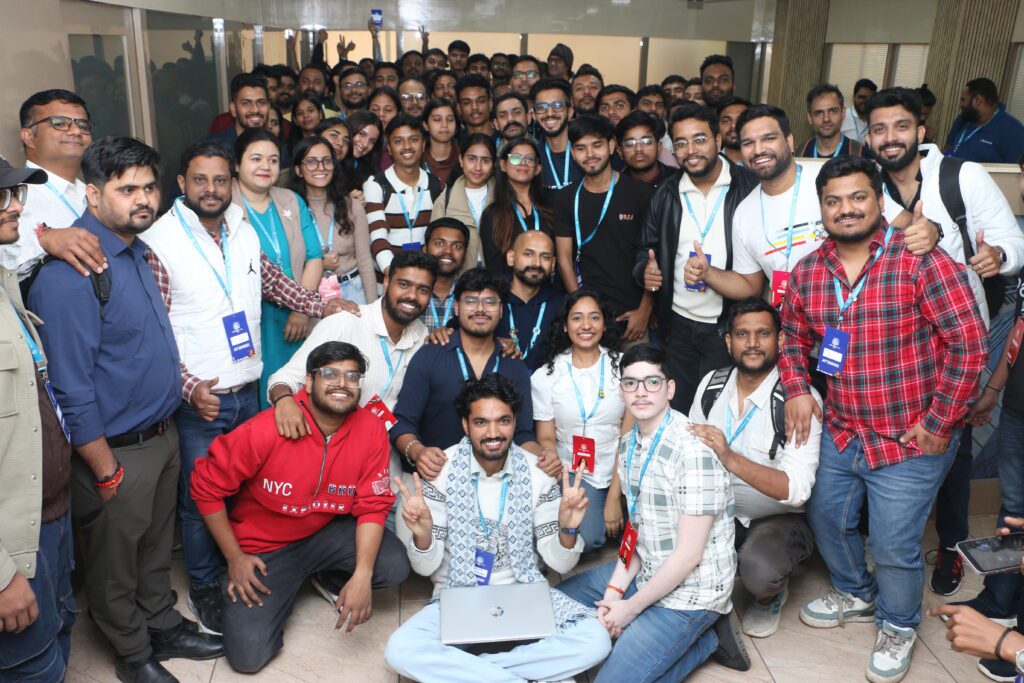
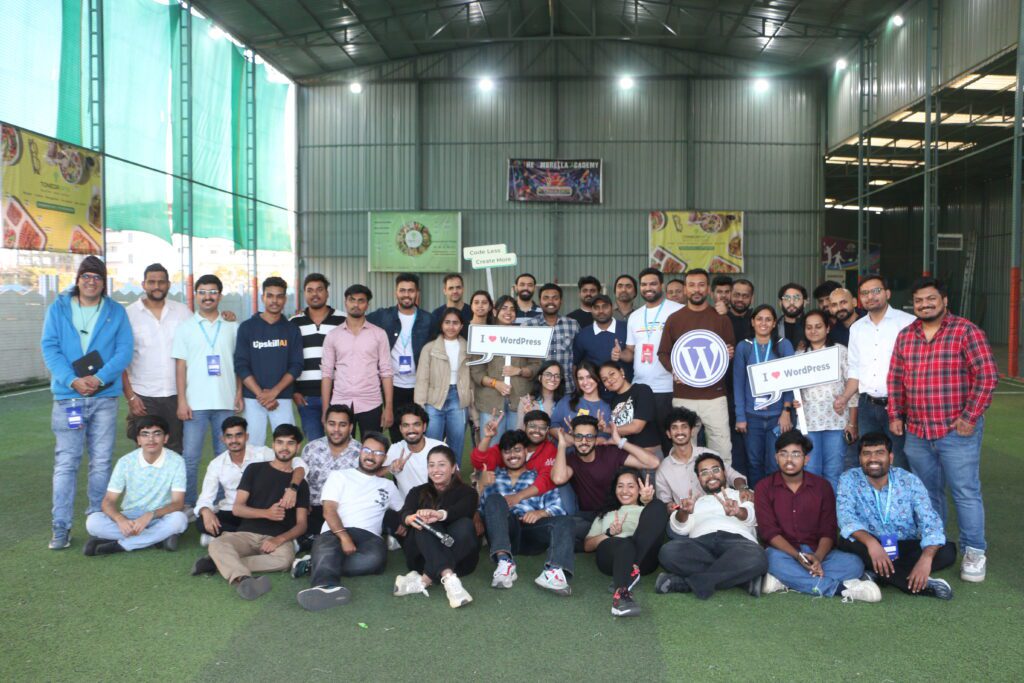
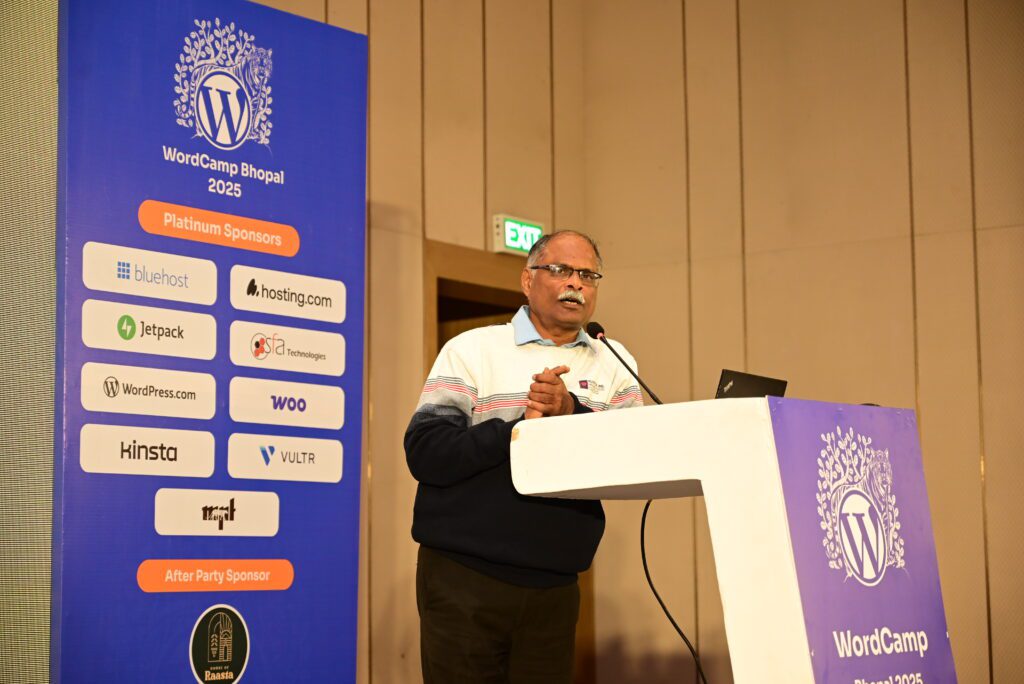
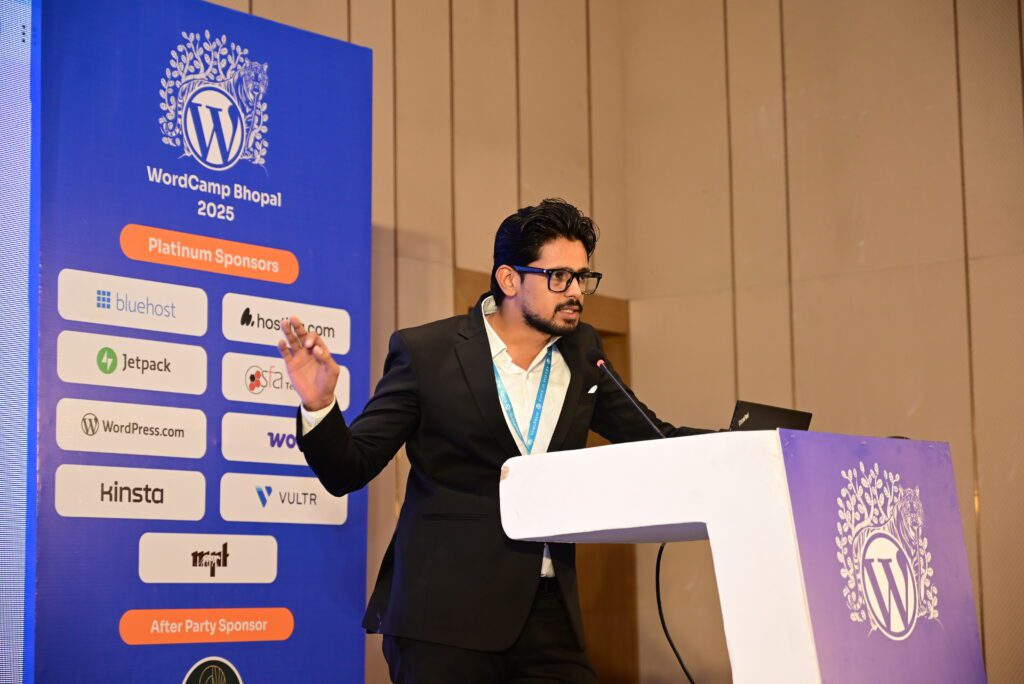
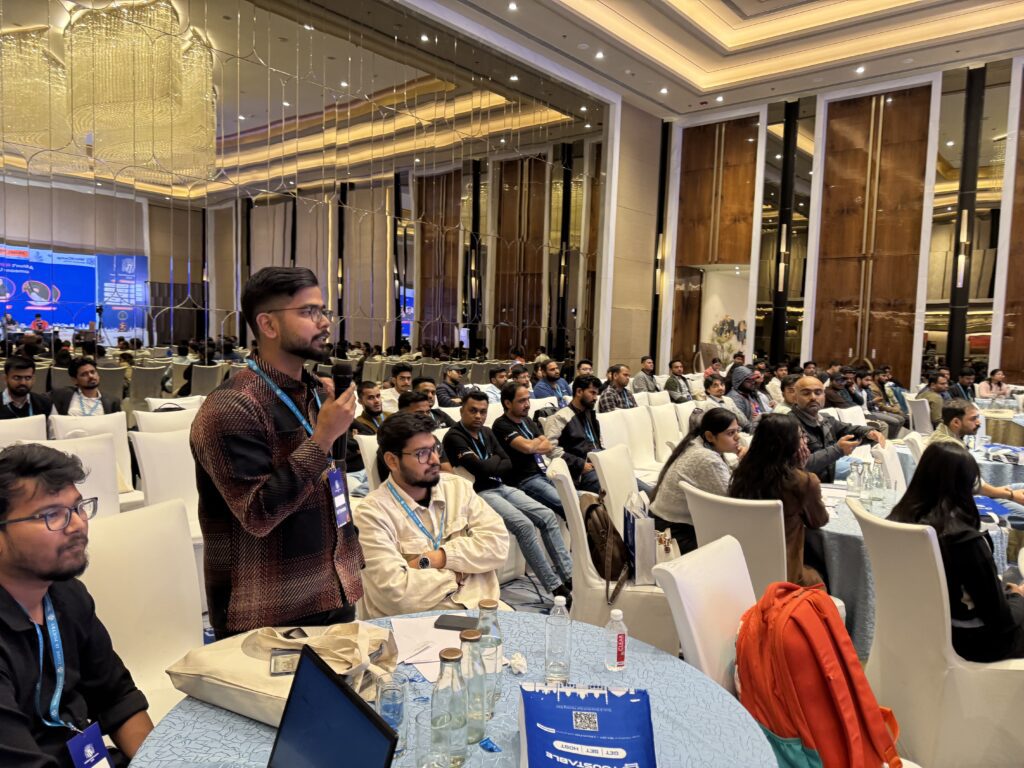
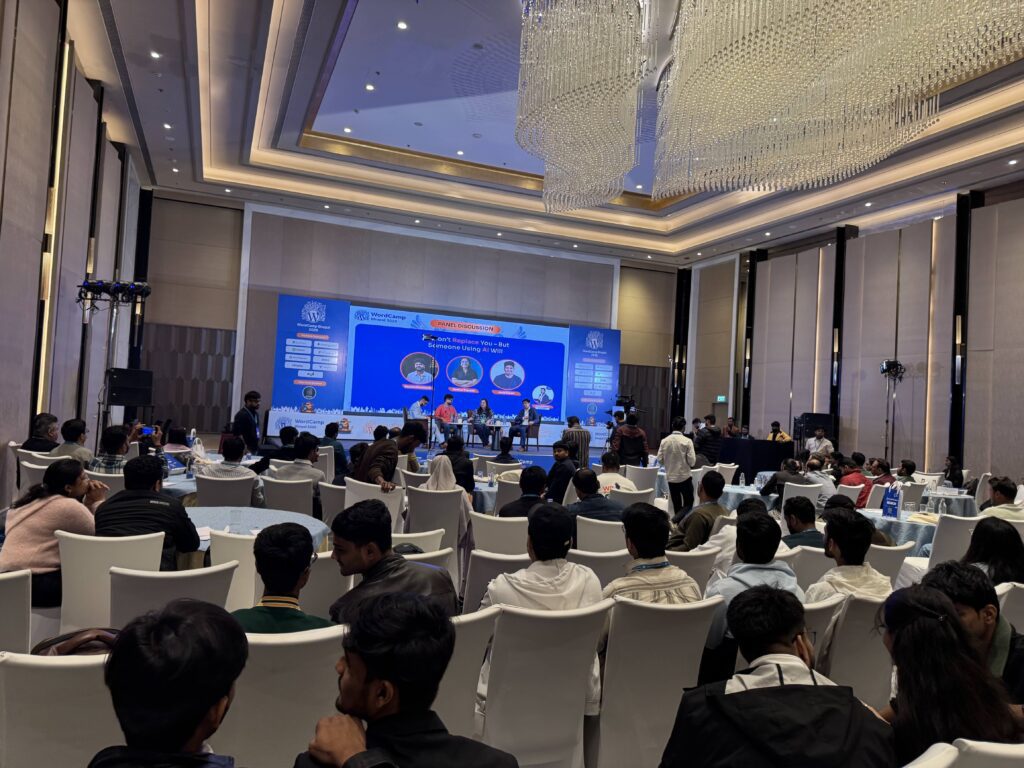
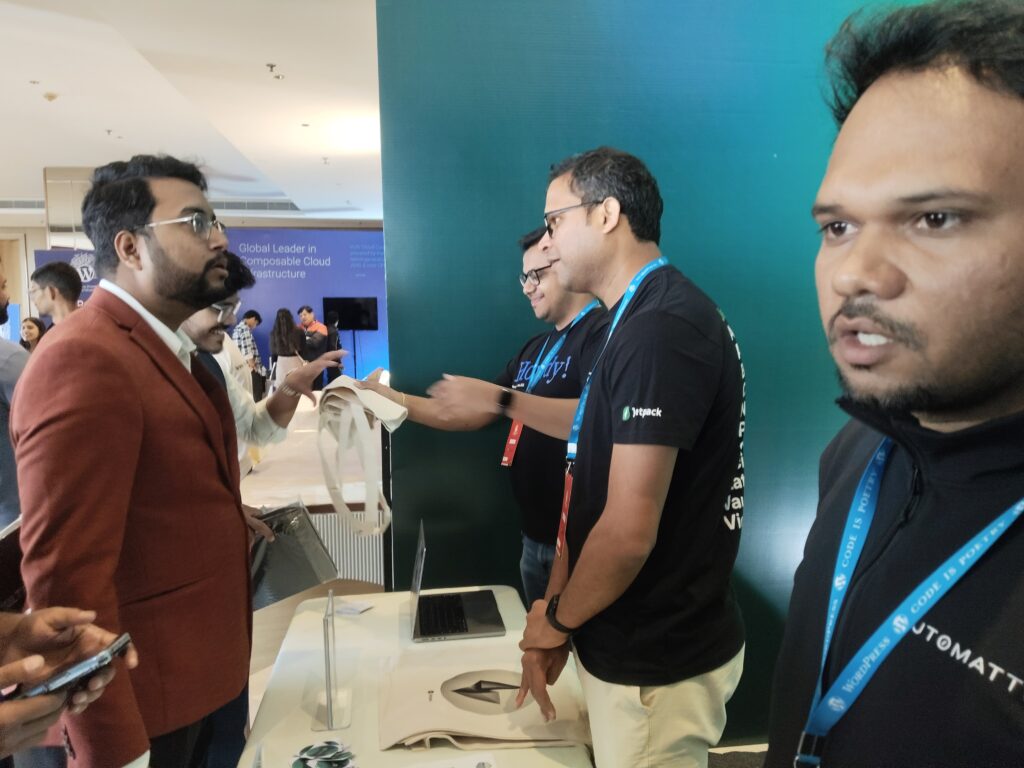
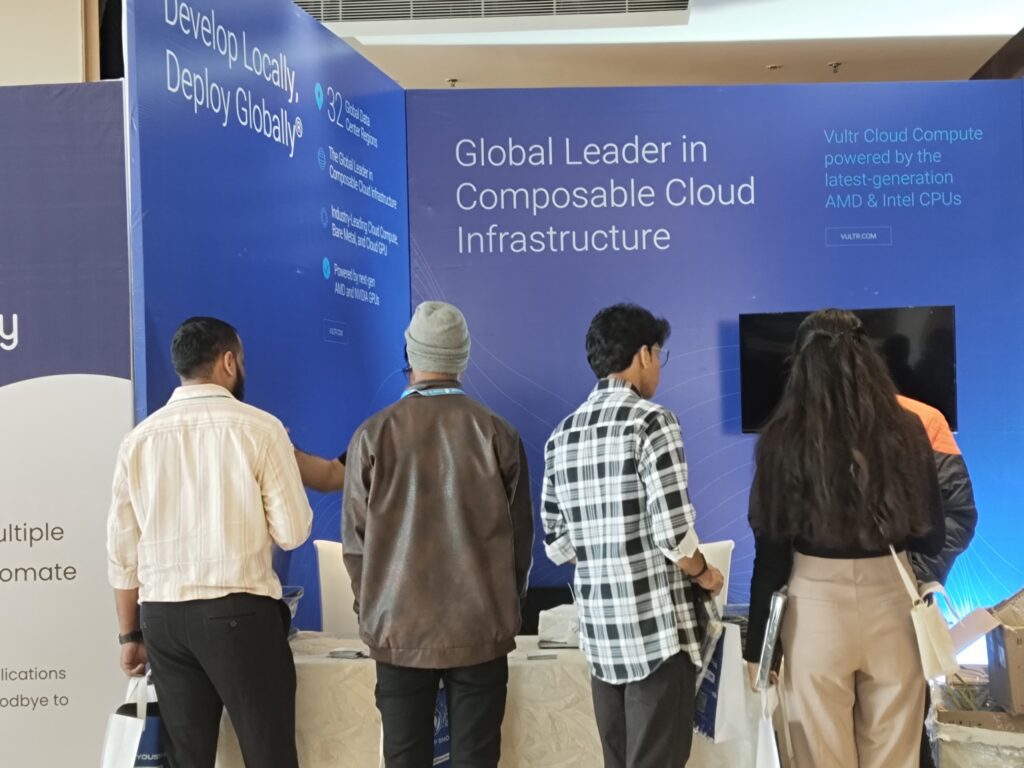
Over 400+ attendees came together for a full-scale WordCamp experience which unfolded at Courtyard by Marriott, Bhopal— speaker sessions, hands-on workshops, sponsor booths, community collaboration, and Contributor Day.
Parallel tracks allowed people to learn in the way that suited them best. Topics ranged across design, development, WordPress, AI, SEO, mental health, remote work, education, governance, culture, and careers.
Day 1 began where WordPress always begins: with contribution. Contributor’s Day wasn’t a formality on the schedule; it was the foundation. Around 150 people joined to contribute to the WordPress project — joining Test, Support, Polyglots, Photo, and Patterns teams. Hesitation slowly gave way to curiosity, and curiosity to confidence.
As shared by Makrand on X
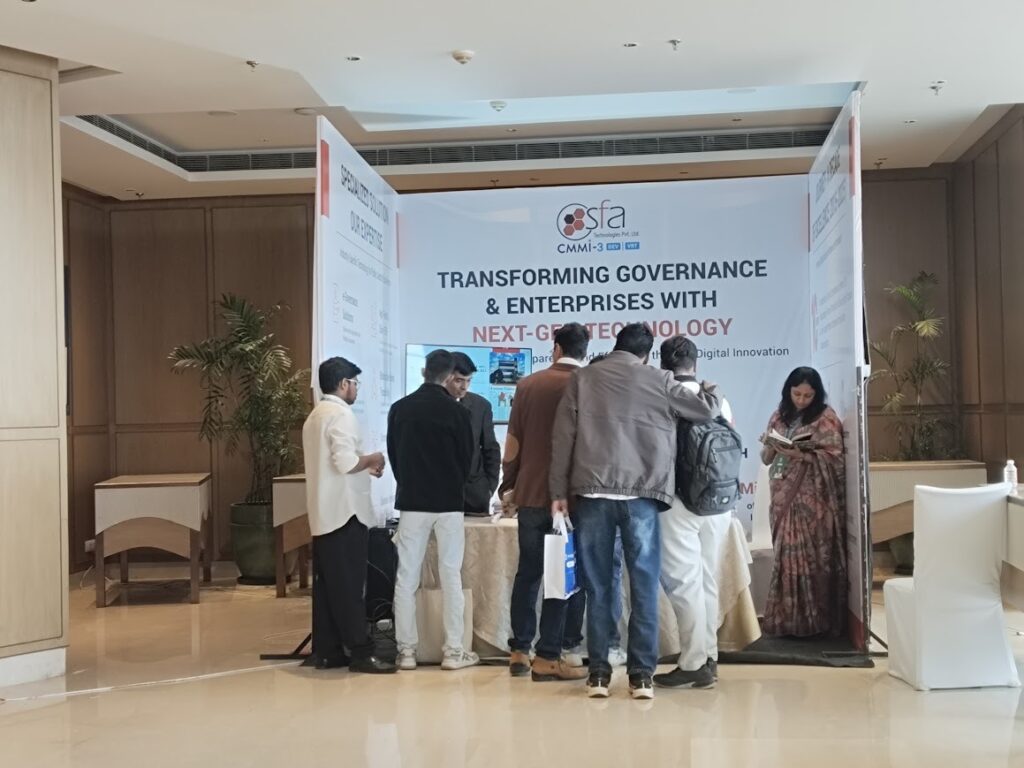
For many attendees, this was the first time they truly experienced where the WordPress community comes from. Not just as users, but as contributors. It was a quiet, powerful introduction to the spirit of open source — hosted at the property of our Platinum Sponsor, SFATechnologies, who supported the space wholeheartedly.
An Evening That Broke the Ice (and the Rules?)
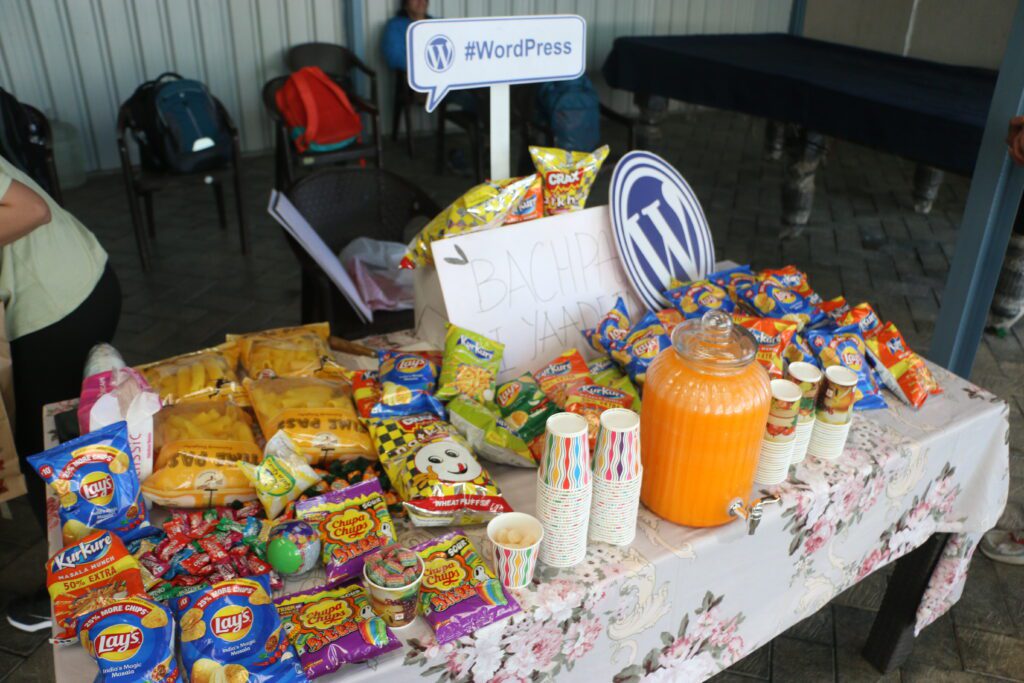
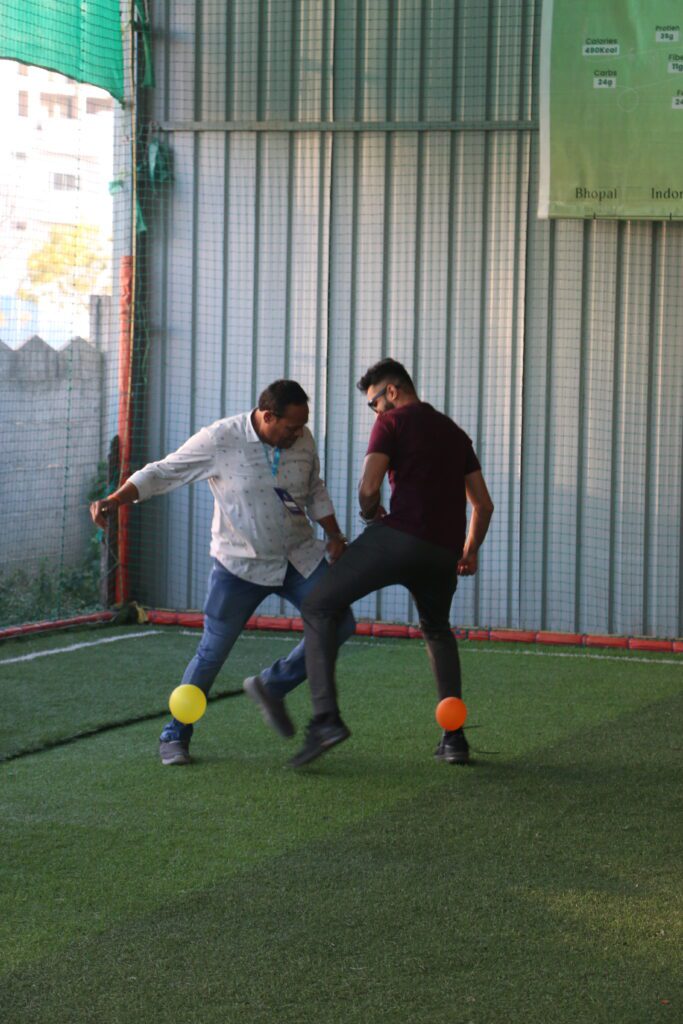
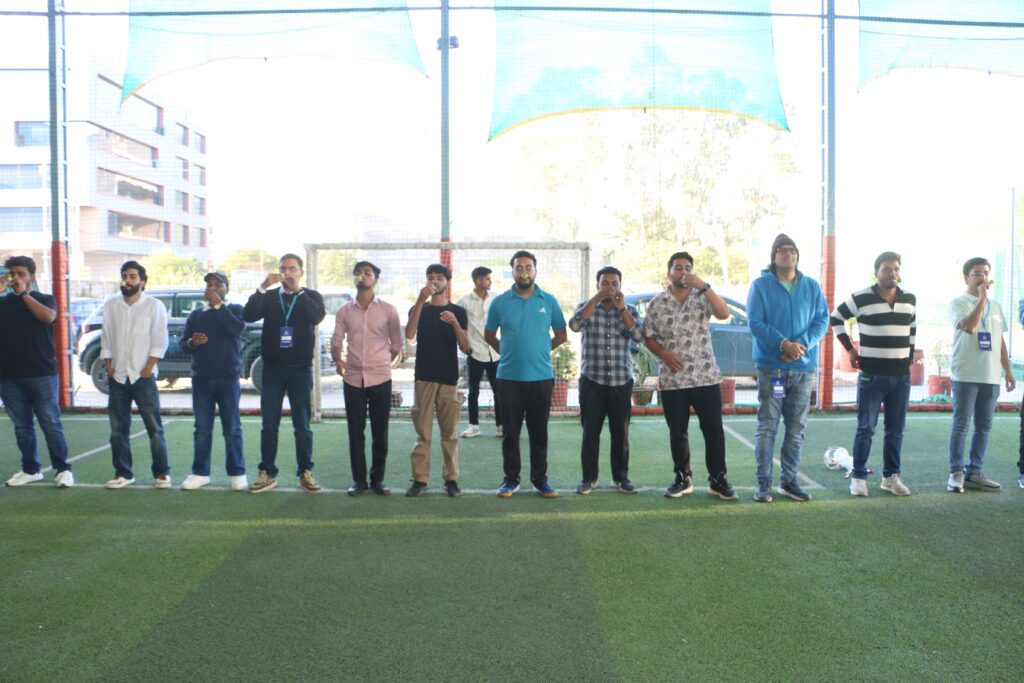
One of the most joyful experiments of the weekend was our games and sports evening. No structured networking. No awkward introductions. Just play, teamwork, and laughter. Strangers became teammates. Conversations happened without effort. Team spirit took centre stage.
Hosted at The Umbrella Academy, and lovingly brought together with the help of Vartika, the evening carried a simple idea — conferences don’t have to be boring to be meaningful. They can be fun and purposeful. Our official theme? “404: Adulting Not Found.” And honestly, it worked.
Beginning With the Drill- Day 2
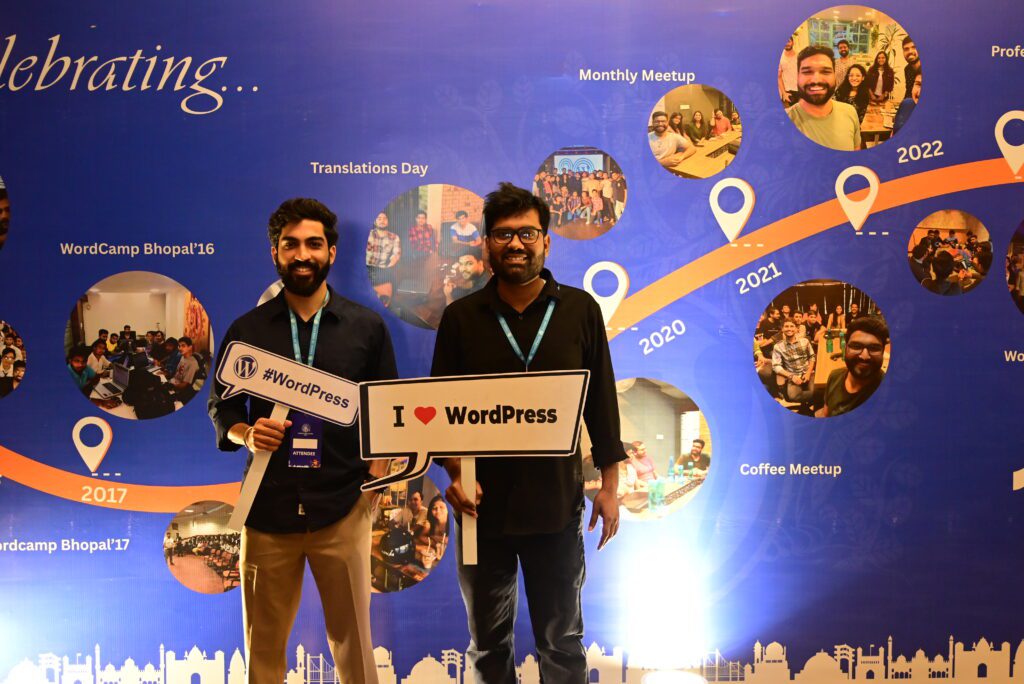
At the entrance stood our “10 Years of WordPress Bhopal” photo wall — a visual journey through meetups, WordCamps, friendships, and moments that shaped this community.
People stopped mid-step. They searched for familiar faces. They smiled, laughed, and reminisced.
Some moments don’t need explanations — this was one of them.
Another experiment that surprised us was the WordPress Showcase. We invited community members to showcase what they had built. We wondered if we’d get enough responses. Instead, we saw four solid showcases, each carrying stories of effort, learning, and pride.
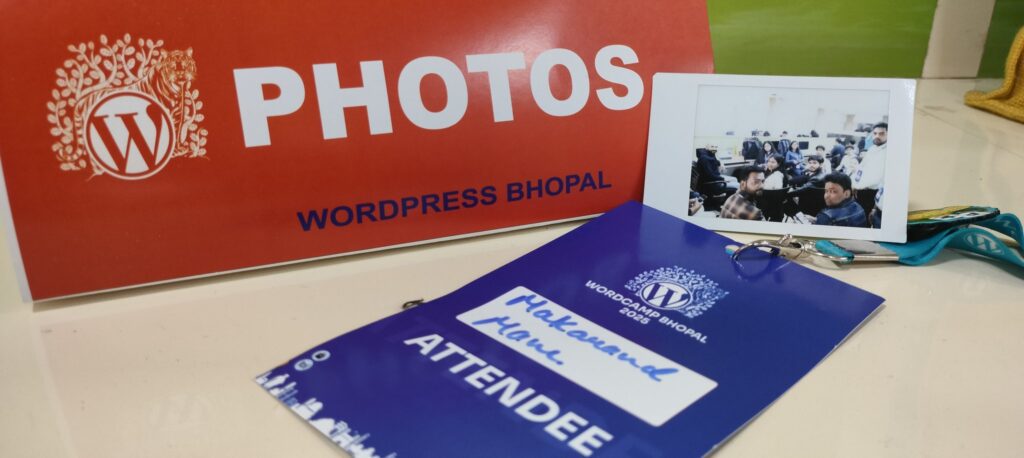
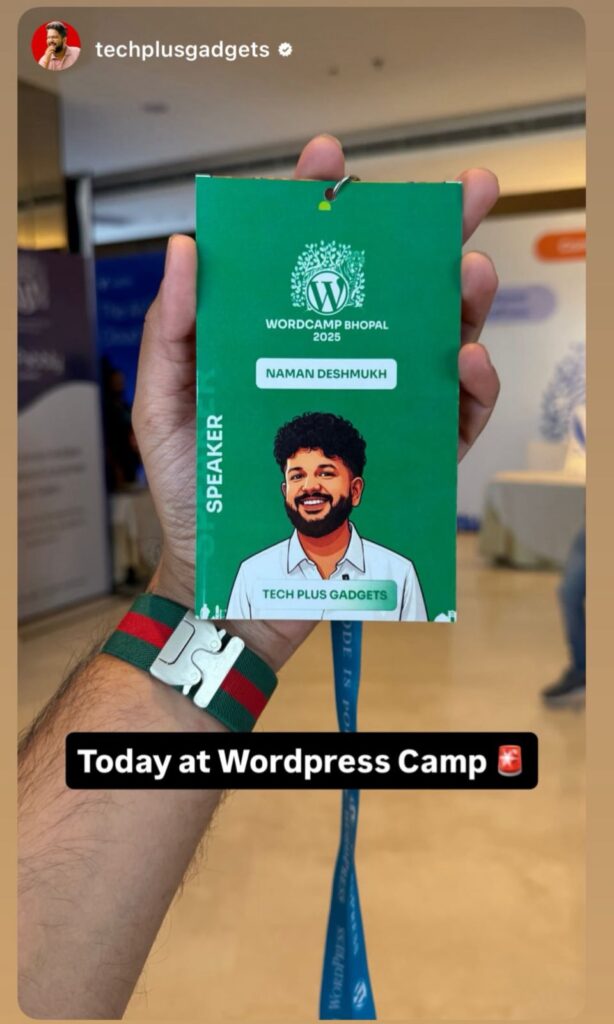
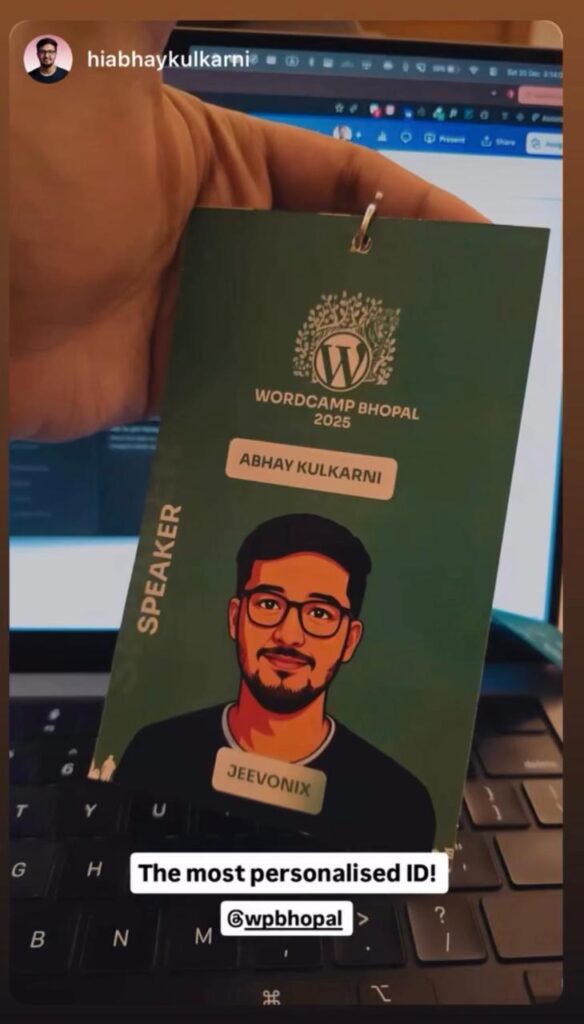
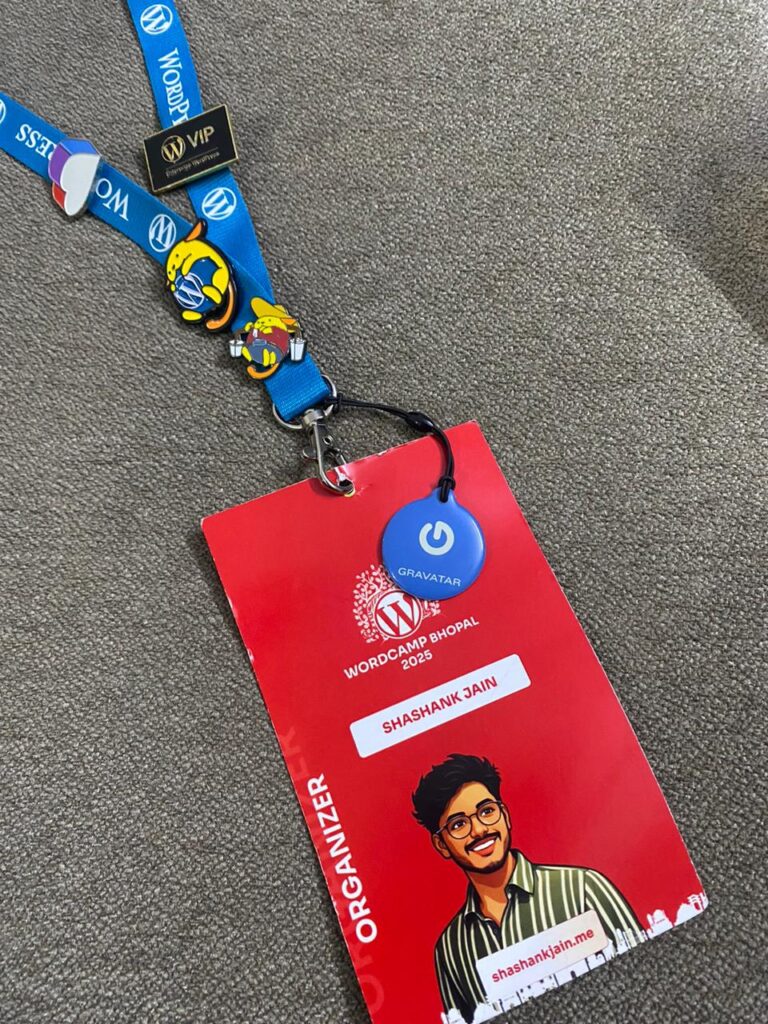
In the series of firsts- we also experimented with custom ID cards for speakers, sponsors, and organisers — a small but thoughtful detail. While extending this to all attendees wasn’t possible this time due to logistical and data-consent challenges, the response was overwhelmingly warm.
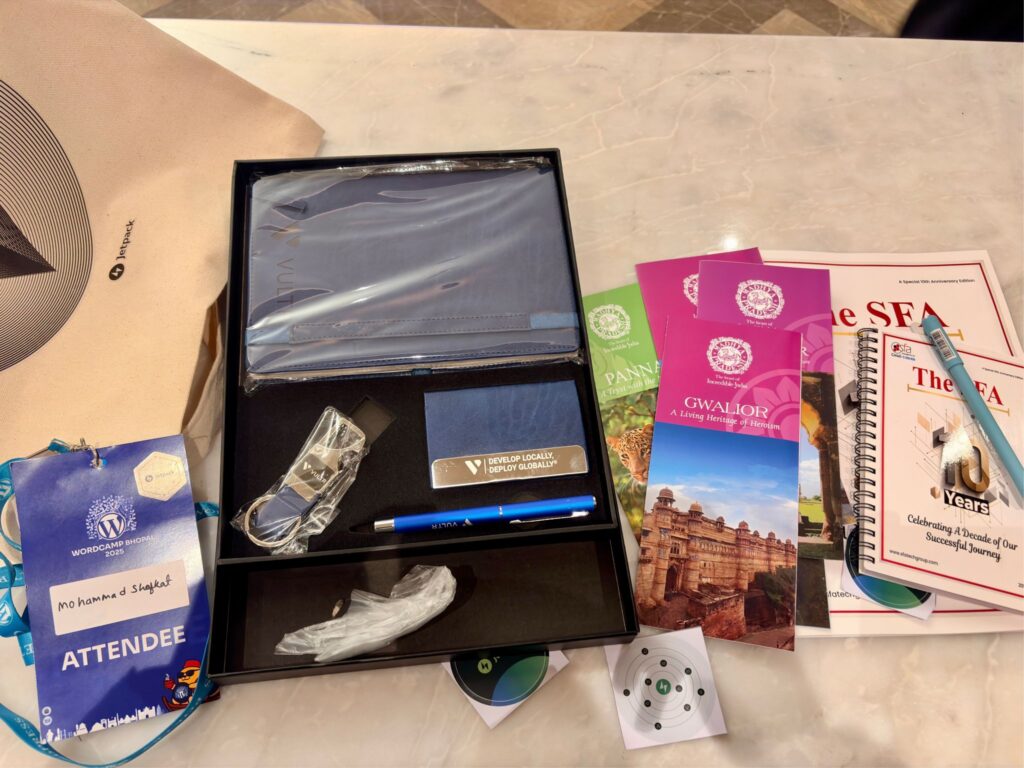
Swag With a Story
This year, swag told a story.
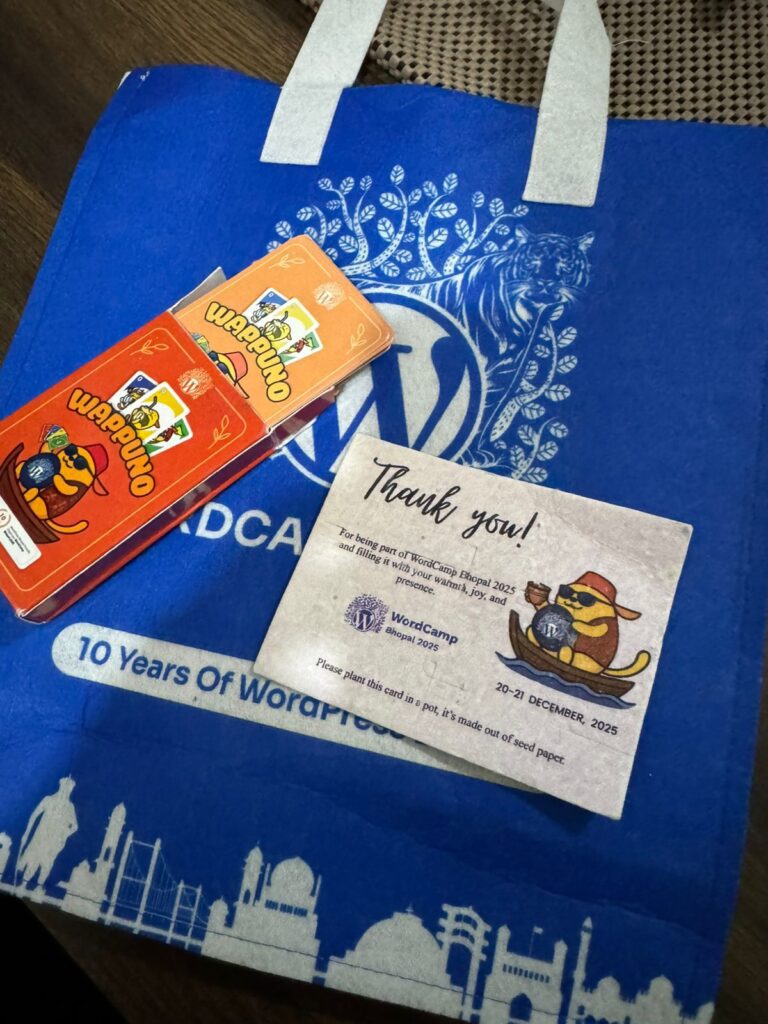
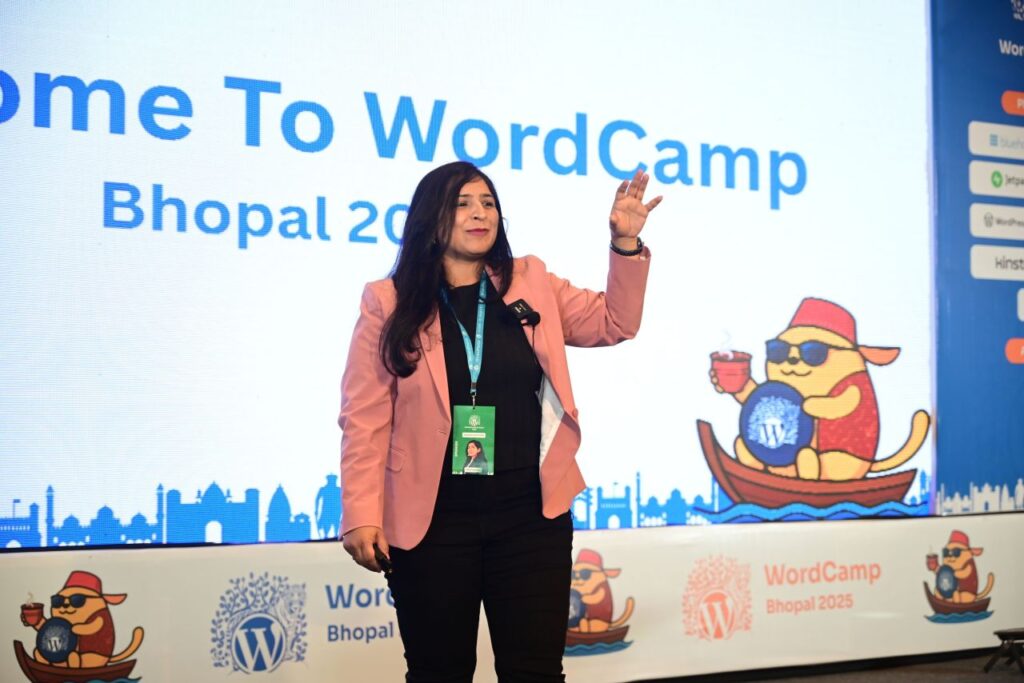
Our Wappu this year carried Bhopal in its soul — a tribute to the city of lakes and the warmth of its people. It wasn’t just a mascot, it was our way of saying: this WordCamp belongs to Bhopal, and Bhopal belongs to the community.
WAPPUNO, a WordPress-inspired card game featuring Wappus from WordCamps around the world, quietly reminded everyone that while this WordCamp was rooted in Bhopal, it belonged to something much bigger.
And when it was time to part, we had our little surprise.
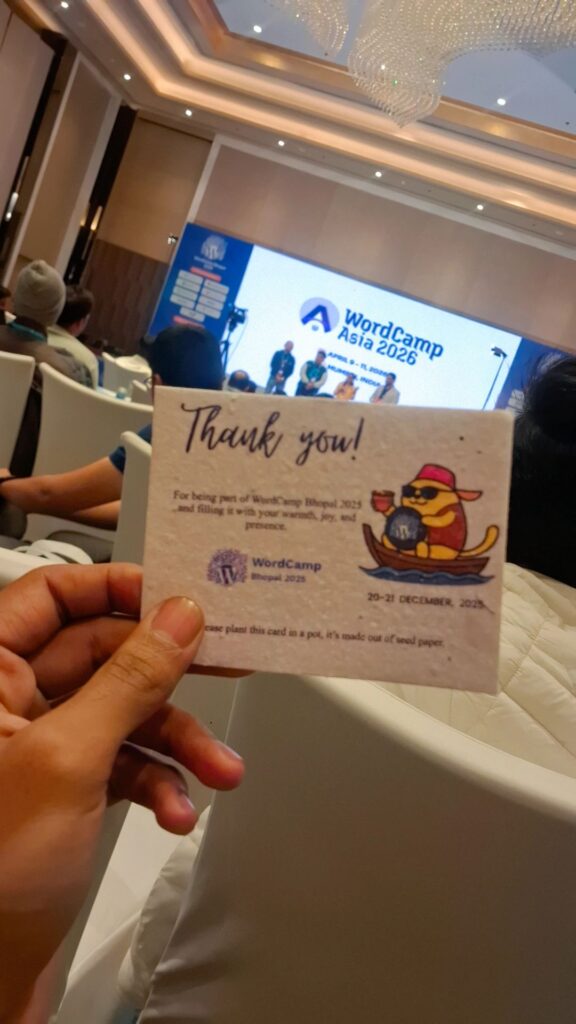
Just like in 2023, sustainability stayed close to our hearts. Instead of traditional souvenirs, attendees received seed-embedded thank-you cards — something to plant, nurture, and grow. A reminder that communities don’t end with events. They continue with care, patience, and time.
Voices on Stage: Diverse, Honest, Impactful
Around 20 resource persons joined us this year, covering a wide range of topics. We were proud to have 6 women speakers, bringing valuable perspectives and diversity to the stage.
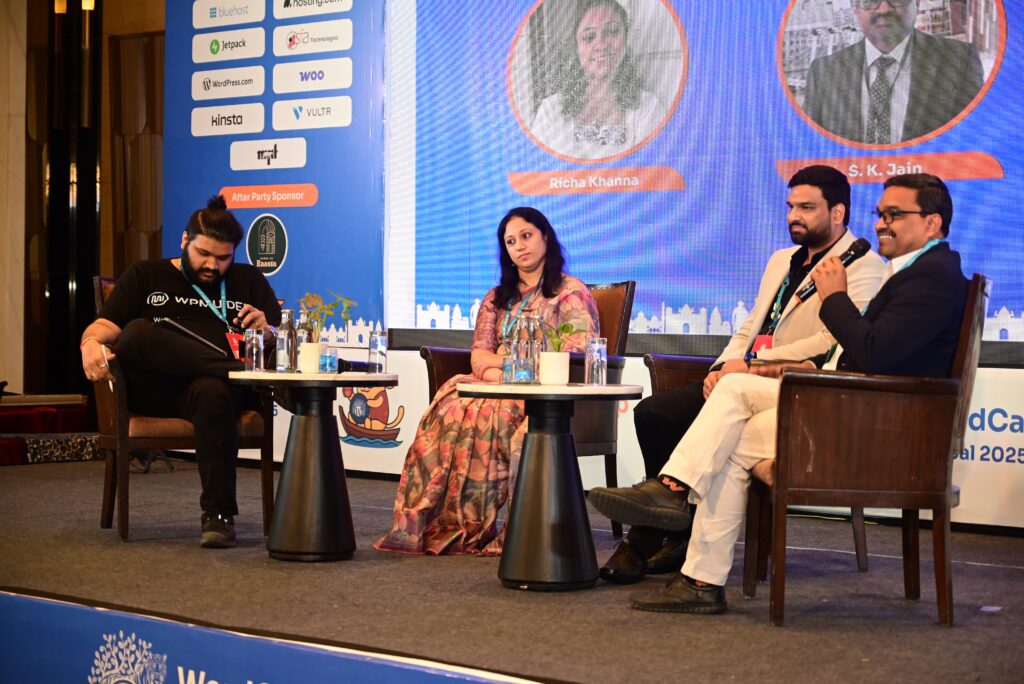
Two panel discussions stood out for sparking deep conversations:
From website to social media marketing to logistics and ideas and so many other things, it was their dedication that could bring all of this together so well.
Spreading the Word
Media Partners: WP Baat, WP Simplified, Aayudh, Hashtag India, Bhopal Ki Baatein
Community Partners: LinkedIn Local, Google Developer Groups SATI Vidisha, Bhopal Development Index, Tech Help 4 U
Thank you for being pillars in amplifying our voice.
Looking Ahead
WordCamp Bhopal 2025 reminded us that WordCamps are not just about WordPress, they’re about people, stories, shared growth, and the courage to try something new.
From thoughtful sustainability choices to inclusive programming, from powerful panels to joyful moments over games and desserts — every piece mattered.
They’re about people, stories, shared growth, and belonging.
Our larger idea throughout was simple, yet ambitious — to carry tradition forward in a refined, modern setup, filled with thought, celebration, and joy. We thought we were building this mostly for the younger generation. But when we saw middle-aged and senior community members actively participating, it became clear:
This wasn’t about age, roles, or experience levels. It was about belonging. And that’s exactly what we hoped WordCamp Bhopal 2025 would feel like.
To the community that keeps believing and encouraging, thank you for believing in us.
Privacy & Cookies: This site uses cookies. By continuing to use this website, you agree to their use.
To find out more, including how to control cookies, please see here:
Cookie Policy